

The following is a compilation of reports from the US , Australia and Canada about fires, explosions, electrical problems or burned out appliances due to Smart Meter installations. For a summary of the problems, read this: https://emfsafetynetwork.org/wp-content/uploads/2016/01/Summary-of-Evidence-on-Smart-Meter-Fires.pdf
Please note: Unfortunately many links to news articles are no longer available. You can try finding the story using the url and the Wayback machine: https://archive.org/web/
Here’s very important advice from an insurance specialist who is well aware of smart meter fires.
The major issues in moving forward in dealing with defective Smart Meters and Fires which result from their malfunction are as follows:
- The fire departments investigating the fires need to have a category established in their incident reports to indicate a Smart Meter malfunction should be considered. As it stands now, the cause is identified as electrical in nature, or cause cannot be identified.
- The function of the responding utility companies needs to be changed. The fire departments which are in route to a fire scene will call the local utility company requesting they come to shut off the electricity, and gas. The utility companies will ask a matter of practice remove the Smart Meter from the loss scene and hold it safely in their vaults. The only way that an Insurance Company can get to the meter at the present time is to subpoena the meter for testing, and the subpoena cost money.
- Finally, since I have been identified as the only Insurance Industry person speaking out against the Smart Meter debacle I can say that the Insurance Industry needs a change of heart and mind. I was told verbally, face to face, that the odds are still in favor of the Insurance Company. It is still cheaper to pay the claim and subrogate against the utility company for recovery. However, as the Smart Meters age and the lithium batteries in them begin to wear out, leaking into the meter’s interior and going up in flames the balance sheet will tilt in favor of investigation.
- I can personally state that it took the company which I work for 18 months of letter writing and subpoenas to obtain the opportunity to perform destructive testing on the meter that failed and caused the fire. Even then, the settlement was sealed and the final payment to be kept secret from even me.
- Insurance companies need to understand that the investigation of a claim involves determining the cause of the loss, and if that cause can be held responsible financially for the damages. If then takes the adjuster to a failed smart meter so be it.
Respectfully, Norman Lambe, Property Claim Specialist, Precision Risk Management, Inc., For Century-National Insurance, Co. (10/2019)
Direct testimony of Norman Lambe http://documents.dps.ny.gov/public/Common/ViewDoc.aspx?DocRefId=%7B7B8506E8-4FCB-41C1-952E-5DCF899951A5%7D
Smart Meters Under Fire CA 2017
12/20/2022 A Baltimore County couple, Richard and Susan Kahl, said their smart meter “exploded” and caused nearly $1,500 in damage to their home, but their Baltimore Gas and Electric (BGE) claim was denied. BGE claimed “the cause of the power outage/surge was equipment failure due to normal wear and tear.” The Maryland State Fire Marshal has received reports of 38 fires connected to smart or regular meters in the last 10 years. Oliver Alkire, the senior deputy and spokesperson with the Maryland State Fire Marshal, said smart meters are “not something we’re focused on, but certainly something we want to keep an eye on.” (WMAR 2 News)
___________________
(7/2019) Fire season is here, and with it, even greater risks to the public. Most people are unaware that the most preventable fire hazard may be these meters on the side of their homes and every building in their community. OVERVIEW: Fire and Electrical Hazards from ‘Smart’, Wireless, PLC, and Digital Utility Meters by Nina Beety
________________________________
10/27/2017 DISCOVERY BAY, CA A big rig accident caused a power surge, which caused some smart meters to explode. “We heard it from inside the house and the pieces, they look like they went 8 to 10 feet.” “All of a sudden, all the electrical outlets started popping and fire was shooting out of one of them,” said a resident. 2900 customers lost power. https://abc7news.com/big-rig-crash-into-pole-leads-to-discovery-bay-power-surge/2571617/
——————————–
If your home is having electrical problems it could be smart meter related, and your home could be at risk for a fire. This video is mainly about the difficulty in opting out of a smart meter in Texas, however it also explains how the health and electrical problems they were having were linked to the smart meter.
The US Consumer Products Safety Commission (CPSC) is a federal agency that will take complaints on utility smart meters from all US states. If you have or had smart meter electrical or fire problems CALL: (800) 638-2772 Monday through Friday from 8:00 a.m. to 5:30 p.m. ET
_________________________________
10/1/2017 Smart meter explodes on a fire station in Canada: “…they heard a cracking and popping sound that caused the lights in the building to immediately go out….smoke started coming out of the fuse panel… they discovered the hydro [smart] meter on the building had caught fire.” http://www.quintenews.com/2017/10/fire-quinte-west-fire-hall/158461/
——————————————–
Utility claims the homeowner is liable for smart meter meltdown
8/1/2017 Dry ground pulls power boxes from homes in Regina, causes six fires REGINA – “There was a popping sound like fireworks, yellow sparks and a plume of black smoke as a power meter caught fire at a home in Regina. Provincial utility company SaskPower says the fire Monday night was the sixth power meter to ignite in the city in the last two weeks because parched soil is causing the ground to shift.” http://www.kelownadailycourier.ca/news/national_news/article_c4f2d0de-22db-5c5d-869d-ae8d86d93151.html
________________________________
July 2017 UK Are smart meters a FIRE hazard? BBC Watchdog investigation finds poorly fitted meters may have started blazes
“Paul and Lou Lynch from Enfield, told the programme that their tenant witnessed a British Gas engineer installing a smart meter in their flat get into difficulty during the installation before the flat went up in flames. Paul told the BBC the experience was “devastating” and that seven months later the couple was still in the same position.
He said: “Both myself and the fire officer were standing together when the gas engineer installing the meter turned round and said ‘I am really sorry, I’ve blown up your house’.” https://www.thesun.co.uk/money/4112372/bbc-investigates-smart-meters-safety-house-fires/
 3/23/2016 Smart Meter Fire in Owen Sound, Ontario “A smart meter caught on fire at a home in Owen Sound…A member of the family inside the home was up and noticed the lights flickering…Owen Sound Fire Prevention Officer Greg Nicol tells Bayshore Broadcasting News a number of electrical issues could have caused the fire inside the meter.” http://www.bayshorebroadcasting.ca/news_item.php?NewsID=83213
______________________________________________
This is evidence of industry knowledge of smart meter fire hazards: On January 15, 2016, MET Labs writes: “In the past, design flaws in smart meter units have been known to cause serious fire hazards and spotty performance. This has caused a lot of concern for utilities and manufacturers of smart meters.” http://www.metlabs.com/blog/meters/new-ul-2735-electric-utility-meter-standard-ensures-safety-and-performance/

_____________________________
Thousands of smart meters in Ontario to be removed over safety worries (2015) | Toronto Star
“In another jolt to Ontario’s troubled smart-meter program, 5,400 of the electricity conservation gauges are being removed due to a risk of fire. The province’s Electrical Safety Authority (ESA) announced Thursday that Sensus 3.2 smart meters equipped with a remote disconnect feature are affected.” http://www.thestar.com/news/queenspark/2015/01/22/thousands-of-smart-meters-in-ontario-to-be-removed-over-safety-worries.html
Electrical Safety Authority (ESA) has taken this step as a proactive and preventative measure. ESA has determined that these meters can be susceptible to arcing when water or other contaminants get into the meter. https://www.newswire.ca/news-releases/esa-warns-of-electrical-hazards-when-replacing-metal-water-meters-amp-water-supply-lines-826731991.html
Controversy in Memphis over possible smart meter fire: “Members of a Whitehaven family made it out alive when their home went up in flames over the weekend. Now, they suspect a controversial smart meter may have sparked the blaze. ..The fire department determined the cause was electrical in nature, and the family wonders if an electrical meter played a role. “They put a smart meter on the house,” said Mackey. See video: http://www.wmcactionnews5.com/story/29270362/family-claims-mlgw-smart-meter-was-on-burned-house
________________________________________
Ontario smart meter explodes next to gas line (2015): “Veronica Onyskiw woke up to the sound of her dog growling and a loud noise like a revving engine coming from outside her Collingwod, Ontario, home early in the morning last Sunday.
She found the source when she went outside — her hydro smart meter had become a “ball of fire.” “The meter is about three feet from the main gas line into the house,” she said outside her home Wednesday. “If that wall had gone and then the car parked right beside it would’ve been very, very bad.”
Thousands of smart meters attached to homes across the province were ordered removed earlier this year after similarities were found between the structure of those meters and a similar model used in Saskatchewan that was implicated in several fires in that province. Onyskiw’s meter was not among those considered a fire threat.” http://www.torontosun.com/2015/06/03/crisis-averted-as-ont-smart-meter-explodes-next-to-gas-line
______________________________________________
Norm Lambe, an insurance claims adjustor, contends the utility companies are tampering with the evidence by immediately removing smart meters when there’s a fire. https://smartmeterharm.org/2015/07/28/are-insurance-companies-avoiding-the-smart-meter-problem/
Excerpts of his article: “A dangerous precedent is being followed in the insurance industry concerning the investigation of smart meter fires” “When the local electrical utility arrives and determines that a smart meter is the issue, they have been removing the meter, and preventing the inspection of the meter by the experts…”
“This is a serious situation, as the utility company, upon removal of the meter is tampering with what is evidence concerning the cause of the fire and can be held criminally responsible. ”
“Most utility companies will respond to us requesting our information concerning the cost of repair. When that information is provided, the utility company will normally pay the requested amount, less an allowance for depreciation of the structure and personal property if required.”
________________________________________________
PG&E, The Utility Reform Network, Office of Ratepayer Advocates, California Energy Commission, and California Public Utilities Commission Energy Division held a Technology Advisory Panel (TAP) meeting on 1/28/2011 and discussed : “Smart Meter incidences involving fires and electrical shorts.” See action item 3 No 2. TAP Agenda 1:28:2011
Here’s a redacted data response from 2013 on smart meter fires from PG&E to the CPUC Energy Division. PG&E says they are now using temperature and voltage sensors on smart meters and have changed out many electrical panels. Data Response PG&E smart meter fires
In the 2014 California Public Utilities Commission (CPUC) Annual Report to the Governor and the Legislature states, “There was some concern regarding fires in smart meters but this was investigated by CPUC staff in 2013. Staff determined that, of reported fires involving smart meter installation, none were actually caused by the smart meter.” EMF Safety Network sent a records act request for the details of that investigation in 2014, which the CPUC has ignored.
CPUC Report to the Governor, see page 5: http://www.cpuc.ca.gov/NR/rdonlyres/2F5149C6-885A-4211-8CBA-A4F88F02CEA7/0/SmartGridAnnualReport2013final.pdf
__________________________________________________
CPSC Incident Description
On November 11th [2015] we had RG&E come to our house to replace our outside old rotary electric meter since the plastic was fogged up and I was no longer able to read the meter for our every other month meter read. RG&E replaced the rotary meter with a digital smart reader. From that night on the lights in our house began to flicker. Coincidence I do not think so. We called RG&E back and told them about the situation. They came back out on Monday November 23, 2015. They said they replaced the smart meter with another smart meter and checked the voltage on the meter and all looked OK. Well, the very same night the lights started to flicker again in the entire house and every night/day afterwards . On the 26th (Thanksgiving) even our motion sensor driveway flood lights started to flicker, that has never happened in the 12 years we lived here. Today, November 27th we called RG&E and were told we would have to call the direct number (585) 724-8666 on Monday the 30th to once again report the problem. After reading about all the fires and issues folks across the country have with smart meters, I’m going to insist they switch us back to a rotary meter.
______________________________________________________
Dozens of smart meters exploded and caught fire after an electrical surge cut power to about 5800 homes near Stockton CA. CBS News reports, “A power surge left thousands without power for most of the day in Stockton after smart meters on their homes exploded on Monday.” “Neighbors in the South Stockton area described it as a large pop, a bomb going off, and strong enough to shake a house.” https://emfsafetynetwork.org/dozens-of-smart-meters-explode-from-power-surge/
___________________________________
Smart Meters Fire, Living Hell and Bureaucratic Messes
“With that flash, every lightbulb in my house had exploded! The old lightbulbs merely popped and shattered. Those new lightbulbs (CFLs) were on fire! I could see smoke, smell burning plastic.”
http://www.dcclothesline.com/2015/06/27/smart-meters-fire-living-hell-and-bureaucratic-messes/
_______________________________________________________
June 2015: In the middle of the night a Collingwood Ontario family awoke to an explosion which turned out to be the smart meter which had become a “ball of fire” attached to the side of their house. They lost electricity, the smoke detector and alarm system did not function because the smart meter blew up. Listen to the homeowner, and public comments: https://soundcloud.com/am640/mcarthursmart-meters-are-exploding-homeowner-veronica-onyskiw-discusses-jun-4th-2015
________________________________________________
2018 Pickering meter explodes
__________________________________________________________________
Fatal Dallas (Texas) fire puts scrutiny on smart meters: Feb. 3, 2015.
“James Humphrey Jr. was found dead on his bedroom floor Monday night. The elderly man was unable to escape after his South Dallas home went up in flames. “They came out and changed that meter three weeks ago, and the house caught on fire from that meter,” she alleged. http://www.wfaa.com/story/news/local/dallas-county/2015/02/03/fatal-dallas-fire-puts-scrutiny-on-smart-meters/22821335/ https://12160.info/profiles/blogs/fatal-dallas-fire-puts-scrutiny-on-smart-meters
____________________________________________________________________
January 7, 2015: Alexandria, Virginia: Smart meter explodes and causes $75,000 in damage to residence. http://www.fairfaxcounty.gov/fr/news/2015archive/2015_04.htm#
______________________________________________
Dec 17, 2014 SaskPower confirms White City smart meter fire
“Tuesday’s fire the 10th smart meter fire in province. Smart meters are being removed across the province, but yet another one has sparked a fire.
SaskPower said the fire happened in White City on Tuesday. The company described it as similar to the other nine fires with melting or smoke seen on the meters, but no damage to the house. Other fires have varied in size from some just melting, to others that charred the siding on a home.” See another story here: https://www.smart-energy.com/regional-news/north-america/smart-meter-fires-saskpower-and-sensus-hit-again-as-10th-unit-overheats/
______________________________________________
Smart meters catch-fire when it rains
 “…an independent review in Canada revealed that smart meters are experiencing catastrophic failures when rain water (and/or condensation along with other contaminants) gets into the smart meters themselves, causing arcing across electronic components with eventual failure of the meter.
Well, last night it rained in Regina, Saskatchewan, and there was another smart meter fire.
SaskPower confirmed crews were called to replace yet another failed smart meter on a resident’s home on Regina’s east side early Friday morning.”
_____________________________________________
Smart meters linked to 13 fires in Ontario, Fire Marshal says http://www.thestar.com/news/canada/2014/08/08/smart_meters_linked_to_13_fires_in_ontario_fire_marshal_says.html
_____________________________________________
10/6/2014 Couple Escapes fire, Dogs Dead, Blames Smart Meter A couple escapes a house fire in Detroit. Sadly, their two dogs died in the blaze. Investigators are still working to determine the cause, but the people who live in the house insist a smart meter is to blame…Investigators from Detroit’s Fire Department say two circuit boxes were connected to the smart meter outside the house and one of them blew. https://www.electrahealth.com/Couple-Escapes-House-Fire-Dogs-Killed-Blame-Smart-Meter_b_332.html
9/16/2014 Reno, Sparks fire chiefs call for smart meter probe (article excerpts)
The Reno and Sparks fire chiefs are asking the Public Utilities Commission to investigate the safety of smart meters installed by NV Energy on homes throughout the state in the wake of a troubling spate of blazes they believe are associated with the meters, including one recent fire that killed a 61-year-old woman.
Nine fires have occurred in Reno and Sparks that city investigators say are linked to the smart meters.
One of the fires in Reno burned a man’s face. The meter burst into flames when he flipped a breaker switch, scorching him. He put out the flames with a fire extinguisher and was treated at a local hospital.
Fire chief Garrison said meter fires are particularly concerning because they start on the outside of the house, won’t be picked up by indoor smoke detectors and can escape immediate notice.
“It can burn a long time and enter the attic or the walls,” Garrison said. “The occupants inside may not even be aware the house is on fire. This is very alarming to me.”
NV Energy executives steadfastly maintain that its smart meters have never been listed as the official cause of any structure fire in Nevada.
NV Energy has responded to 70 “consumed meters,” since it first started installing them in 2010. A “consumed meter” as one that has had its plastic casing “melted or breached and there can be soot,” he said. Consumed meters can be caused by a voltage overload in the home or a “hot socket,” where there is too much “electrical resistance” in the smart meter’s connection to the box and it becomes overheated.
Portland General Electric replaced 70,000 Sensus smart meters in July after three “small fires” started by the meters, according to the Oregonian. In 2012, Peco Energy in Philadelphia switched out 186,000 Sensus smart meters after fire concerns, according to news accounts. And Sask-Power in Saskatchewan, Canada is in the process of replacing more than 100,000 Sensus smart meters, according to news accounts.
Fire chief Garrison warns, “I would say be very aware, very vigilant about any type of potential electrical problem they might see in their home,” he said. “If you noticed any burned electrical panel, any smoke, even if it’s small, wispy smoke, if the meter is extremely hot, or you hear a noise or see any arcing, call 911 and the fire department will come out and ensure the meter is properly checked.”
__________________________________
TESCO research on hot sockets Analog meters withstand “hot sockets” better than smart meters. “At the start of our laboratory investigation the oldest electro mechanical meters withstood hot sockets the best… The latest vintage solid state meters [smart meters] withstood hot sockets the least.”
________________________________________________
8/28/2014 BC Hydro smart meter on fire/ severe damage to home


_________________________________________________
8/27/2014 Lakeland Electric, Florida to Replace 10,657 Residential Smart Meters [Sensus brand] because six residential meters have caught fire. General Manager Joel Ivy Ivy wrote, “While this is a small percentage, the integrity, safety and performance of our equipment is paramount, so we are replacing the remote-disconnect [Sensus] meters.” The Ledger
_____________________________________________
Aug 1, 2014 Fires prompt removal of 175,000 [Sensus] smart meters in Canada and Oregon
In Saskatchewan Canada the government ordered 105,000 smart meters be replaced with non-transmitting older meters because of several fires started by smart meters. “The concerns are significant enough that we believe that any time that families are at risk here in Saskatchewan, actions have to be taken. That’s why we’ve directed SaskPower accordingly.” Provincial minister Bill Boyd said.
In addition 70,000 smart meters with an automatic shut off will be replaced in Portland Oregon because of fires.
______________________________________
July 15, 2014 SaskPower (Saskatchewan, Canada) halting smart meter installations after several fires
“SaskPower is temporarily suspending its installation of smart meters around the province after half a dozen have caught fire in recent weeks….SaskPower will not be installing any more until their investigation is complete…”
____________________________________________________________
SMUD smart meter burn out causes electrical failure; fire hazard
Margie Rothwell was having serious problems with the electricity in her home. The power turned on and off for no apparent reason. The house fire alarm kept going off and the noises were scaring her dog.
She called her brother, who was a master electrician, to help her. He found electrical lines not working and the smart meter digital readout was unreadable. He recommended she call the utility SMUD right away, which she did. (SMUD stands for Sacramento Municipal Utility District.)
A couple hours later, the SMUD technician came and when he got closer to the smart meter he said he smelled “burn”.
Margie recalled, “He had a very horrified look on his face when he looked at the burnt smart meter and meter socket.” The technician removed the smart meter and quickly put it in his truck, concealing the evidence. https://emfsafetynetwork.org/smud-smart-meter-burn-out-causes-electrical-failure-fire-hazard/
_____________________________________________________________
May, 2014: Basement fire linked to installation of smart meter
“A fire started at a Glencairn home as SaskPower [Saskatchewan, Canada] workers installed a smart meter on Wednesday afternoon.”
“From what we know right now, Grid One (Solutions) was on scene exchanging the meter, upgrading to the smart meter, and accidentally grounded the electrical circuit which resulted in the ignition and subsequent fire,” said Gerard Kay, deputy chief with Regina Fire and Protective Services. Leader-Post
_____________________________________________________
2/7/2014  Thirty residents were displaced by an electrical fire in Pennsylvania at Bensalem’s Thunder Hollow apartments. 16 apartments were affected. One firefighter was injured. According to the Bucks County Courier Times, the Bensalem Battalion Chief Robert Sponheimer said the fire started in a utility meter in an outside shed. He also said “residents reported hearing a loud bang, then losing power Thursday evening. Within minutes they saw smoke pouring out of the shed. The fire then spread to the building and its roof”. Video here: http://youtu.be/Vn0-Xnp6ZOU The photo of the scene illustrates these were smart meters.

Lakeland Florida smart meters overheat, catch fire and melt “Amy Adams had just returned to her northwest Lakeland home when she smelled something burning. Adams and her family members also noticed theirs was the only home in the neighborhood that didn’t have power. She thought there was a problem with the breaker, but saw a charred power box and melted smart meter about three feet from her children’s corner bedroom. “The whole box was burnt up,” Adams said of the November incident.” In Lakeland 178 smart meters have been replaced due to overheating. https://www.theledger.com/article/LK/20140116/News/608072190/LL
___________________________________________
 10/25/ 2013 Livonia Michigan. A fire ripped through a Bayberry Street home during the installation of a smart meter. According to the Detroit News the fire caused extensive damage. “DTE spokesman Scott Simons said service technicians were removing an old meter and installing an advanced meter when they saw signs of fire.”
CBS Detroit also reported on the fire stating the resident Kirk Lytwyn stated: “A representative from DTE was out here to change the meters and in the process of changing the meters, from what I understand, it blew on him, blew right in his face,” Lytwyn said. ”Apparently he was wearing the appropriate protective gear.”
_________________________________________________
8/2013 CANADA: http://www.oafc.on.ca/article/unusual-number-fires-smart-meters-linked-ontario-fire-marshal-says-faulty-base-plates-could
Page 10 of the report: “During our initial research of the new meters we encountered an unusual amount of fire incidents involving smart meters. After discovering these incidents our main question was; were they one off incidents or was there a similar systemic root cause. Anecdotal information supported problems occurred after the old analog meters were updated to the new digital Smart Meters”
Page 35: Possible Causes This failure occurred (resulting in a fire) due to a loose connection in the meter base What could be the reasons for this?
- The old meter base connections may not have been in a condition for seamless exchange to a new meter
- New meters may have defects that cause electrical failures or misalignment with old meter base
- Careless installation during change over
_____________________________________________
Posted on CPSC website: Incident date: 8/13/2013 Combination of Smart Meter and aluminum wiring caused house fire. The cable coming from the transformer to the Smart Meter was buried aluminum cable. The aluminum cable overheated and melted; the Smart Meter overheated and a fire began. My observation was that the flames came from the Smart Meter, not the cable, and the meter continued to run until it totally melted down. Another house in my area experienced the same type of meltdown, so I am speculating that this is not an isolated incident. The equipment provider (CenterPoint Energy) disclaimed any obligation to replace any of the damage cable, meter can or breaker box taken out of service by the fire. The CenterPoint technician took the Smart Meter the night of the incident, so I don’t have it as “proof” that it was the source of the blaze, but I observed the flames, and they came from the meter, not the aluminum cable.
__________________________________________
8/2013 Lakeland fire sparks concerns about ‘smart meters (Florida) TV news reported , “A charred electrical box is what’s left of a very scary weekend outside Cherie Oberg’s Carillon Lakes condo in Lakeland. Oberg says the digital “smart meter” on her home burst into flames damaging two adjoining meters. The flames fizzled out by the time Lakeland firefighters arrived, but the fear sparked by the situation is still smoldering for Oberg and her neighbors.” The report and video confirm the Consumer Product and Safety Commission is taking complaints on smart meters. WFLA-TV News Channel 8
____________________________________________________
On December 18, 2012 a PG&E meter reader whistleblower who worked for PGE for 9 1/2 years tells the California Public Utilities Commission judge that:
- Smart Meters CAUSE FIRES.
- PG&E is covering up the Smart Meter fire risk.
- PG&E fired him because he was unwilling to keep quiet.
- The annual budget for 1000 meter readers was 70 million dollars.
- The PG&E smart meter program cost 10 billion, not 2.2 billion
- No one, but meter readers are responsible for gas surveys
PG&E installed GE and Landis and Gyr meters
_________________________________________
“Smart Meter Disaster” is an Australian TV news report on the meter hazards, including fires.(From 2012)
_________________________________________________________________
2013 When ‘Smart’ Meters Kill: The Story of Larry Nikkel — Details Emerge of Vacaville, CA Smart Meter Fire Death Larry Nikkel died in a house fire related to smart meter installation in Vacaville CA. The burnt out computer, loud humming in the house were classic signs that the smart meter was arcing. The case was settled out of court.
_________________________________________________
2/2013 FOX 5 Investigates: Smart meters spark controversy “I was walking to the seventh tee, when the pro came up and said,‘Jump in the car. We just got a call. Your house is on fire,” Michael Capetto said. He lives in Upper Makefield, near Philadelphia, where the utility PECO this past summer reported at least 15 smart meters caught fire or got so hot, the meters melted. Similar fires have been reported in other states too.”…”..the meter sizzling inside the casing like a piece of bacon”
________________________________________________
3/2013 “Memphis Light Gas and Water Division officials on Tuesday told a City Council committee that “smart meters” slated to replace the utility’s traditional meters don’t cause fires….But problems with the metal electrical boxes, or “meter sockets” into which meters are plugged, could cause overheating and spark a “flash over” fire, they reported. Made of plastic, smart meters also can melt.” http://www.commercialappeal.com/news/2013/mar/05/memphis-city-council-briefs/
________________________________________________
1/17/2013 Electric Meter Catches Fire at Winchester Resident’s Home
 A Sensus Smart Meter caught fire on a Winchester TN home. The damage was contained by the brick siding. The owner, Brandon McClain is asking the utilities to pay for the smoke damage to his garage, the loss of his wages to deal with the problems, and the cost to replace the meter base. He states, “I believe the fault lies in the Sensus Smart FlexNet meters Winchester Utilities is currently using, or the utility employees spread the terminals when the smart meter was installed. My family could’ve been seriously harmed.”
__________________________________________________________
11/27/2012 Fire captain finds hazardous power surges follow Smart Meter installations: Matt Beckett, a CA Fire captain stated, “Two years ago PG&E replaced that meter [analog] with a “Smart Meter”. Immediately following we noticed power surges in the form of our refrigerator motor intermittently speeding up simultaneously with our lights becoming brighter. As a seventeen year veteran and current Fire Captain this caused me to become very concerned.” The Smart meter on his house was replaced with an analog, and there were no problems, until a new Smart Meter was reinstalled. This time he had two surge protectors burn out. Read more: https://emfsafetynetwork.org/?p=9013
___________________________________________________________
11/2012 Michigan Is your electric meter dangerous? Some say new meters are leading to fires: “Bonnie and Owen Medd said they never had a problem with the electric meter on their Ann Arbor home until DTE Energy replaced it with a new advanced “smart” meter. Then, it exploded.
“The DTE man told me we were very lucky our house didn’t go up in flames,” said Bonnie. The Medds blame their new smart meter.”… “After hearing about the fire at the Medd’s meter, 7 Action News started digging. We found similar fires are being reported across the country. Our sister station, WPTV in West Palm Beach, Florida, has covered several fires linked in part to smart meters.”
_________________________________________________________
2012 71-year-old woman says Smart Meter torched house, killed puppies “The July 23 fire killed those puppies and caused over $100,000 worth of damage to her home. She blames the Smart Meter. The Houston Fire Department report states this accidental fire is the result of an unspecified electrical malfunction occurring in the electrical meter. One of the conductors leading away from the Smart Meter, showed signs of arcing and the fire originated where that conductor exited the meter box.” http://www.myfoxhouston.com/story/19357185/2012/08/23/71-year-old-woman-says-smart-meter-torched-house-killed-puppies%20
_________________________________________________________
11/29/2012 Examiner: Something is still wrong with the smart meters Writer Norman Lambe outlines his concerns regarding smart meters and gas explosions. “A glitch in the construction of the meters soon became apparent to the installers, and created a situation in which arcing could take place creating a spark, and if a natural gas leak existed anywhere in the vicinity serious problems could result, as witnessed to by the San
Bruno explosion.” He calls for a federal probe on the possible connection between Smart Meters and gas explosions stating, ” I believe it is time for a federal probe into finding out once and for all the responsibility for the natural gas explosions taking place to determine if the smart meters are responsible.” Find this article archived here: http://www.stopsmartmetersbc.com/z/articles-by-norman-lambe-insurance-adjuster-smart-meters-fires/
_______________________________________________________
November 2012 : A recent article recognizes the connection between Smart Meter installations in Reno Nevada and Smart Meters exploding and burning out appliances. According to the article NV Energy Gary Smith admitted to problems with arcing and burnt out appliances, stating, “What happens is sometimes in the panel itself, you can get heating in those clips (where the smart meter’s prongs plug in) if they’re worn out or damaged,” Smith said. “Then we get what we call a ‘hot socket’ and you’ll have arcing and you’ll have a flashover.”
__________________________________________________________
IEEE Smart Meter Fire Reports “Obviously all companies with smart meter programs, and all their suppliers and sub-contractors, are going to have to take a close look at the issue of fire hazards. This is just the beginning of a difficult story. Companies installing smart meters already have run into a lot of consumer push-back because of concerns about privacy, security, and–sometimes–higher rather lower electricity costs. The last thing the smart grid needs is meters causing fires.”
_____________________________________________________________
In August 2012 GE recalled 1.3 million dishwashers due to reports of 15 fires. GE also makes Smart Meters. https://www.consumerreports.org/cro/news/2012/08/ge-recalls-1-3-million-dishwashers-due-to-fire-hazard/index.htm
__________________________________________________________
 GEORGIA Family reports smart meter fire. In the photo the homeowner holds the charred remains of a smart meter which exploded and caught fire on her home, causing $11,000 worth of damage. According to the news report Georgia installed the same type of meters-Sensus- that have sparked fires in other states.https://www.wsbtv.com/news/local/family-blames-new-smart-meter-sparking-fire-home/242724538/
_________________________________________________________
 Smart Meter Causes Dumb Fire
“In June 2010, Shirley Bayliff was sitting at the piano in her suburban Illinois home, giving music lessons to a student, when she heard a “pop” outside the house before the power went out. When she and her husband looked out the window, they saw five-foot flames shooting out from a new General Electric smart meter their utility company had installed as part of a pilot project.”…”Since then, two more of the 130,000 smart meters Commonwealth Edison installed in the area have burst into flames, one in 2011 and one this last July, according to the newspaper. https://www.wired.com/2012/09/self-combusting-smart-meters
Three states utility regulators investigating Smart Meter fires “The Pennsylvania Utilities Commission wants more information about PECO Energy’s handling of its smart meter program, including failure rates of its meters, the number of overheating incidents and how many overheating incidents resulted in damage…Regulators in other states, including Illinois and Maryland, are investigating allegations of dangerously overheating electric smart meters and reports of meter fires.” http://www.phillyburbs.com/news/local/courier_times_news/puc-wants-answers-from-peco-about-smart-meters-overheating/article_9c460673-2206-5dda-9baf-ea12c239741d.html
____________________________________________________________
9/7/2012 Home Scorched by PECO “Smart Meter:” Fire Officials PECO confirms to NBC10 that there have been 26 incidents of smart meters overheating
https://www.nbcphiladelphia.com/news/local/home-scorched-by-peco-smart-meter-fire-officials/1940650/
_____________________________
8/30/2012 Chicago Utility Company admits to Smart Meter related fires The Chicgo Tribune reports, “Commonwealth Edison (ComEd) confirmed on Thursday that three of its smart meters, which wirelessly relay power-use data between homes and the company, have been involved in “small fires” in the Chicago region.”
Recently Maryland utility regulators held a hearing with four major electricity companies about smart meters. The Baltimore Gas and Electric Co. was reported to admit their company experienced five incidents of the smart meters overheating.
According to the Tribune, ComEd replaced 15 heat damaged Smart Meters, and is sending its meter designs for independent evaluation, before it deploys more meters next year. http://www.chicagotribune.com/business/breaking/chi-comed-confirms-smart-meters-involved-in-small-fires–20120830,0,5315472.story
____________________________________________________________
8/25/2012 Woman wants electric company to replace TV (Texas) ” Long blames the installation of a smart meter at her house for shorting out her flat screen and causing her microwave to act up. She also said her radio now broadcasts more static than music. “I left the house (to run some errands) and when I came back, nothing was working,” …It appears an electrical surge fried the TV set and might be responsible for putting the microwave on the fritz. At least, that’s what Long said her electrician told her.” http://galvestondailynews.com/story/336578
_____________________________________________________________
 8/23/2012 Houston Smart Meter Fire ” A southwest Houston woman is blaming a smart meter for a fire that left her home in shambles in July… Harwood provided KHOU 11 news with a document that appears to be from the Houston Fire Department. The letter states “an unspecified electrical malfunction in the electrical meter” caused the fire….” http://www.khou.com/news/local/Woman-blames-smart-meter-for-house-fire-167257385.html
________________________________________________________

Home owner blames smart meter installation for destructive fire (Global TV BC News)
…”The family says the electrical fire shorted out no fewer than 20 different appliances, and a number of electrical outlets…”I got a panic call from my mom saying that there was a fire in the house. So I ran over and there was lots of black smoke. Luckily I could put out the fire out fast with an extinguisher.”…The daughter, who did not want to be identified, says the fire follows the smart meter installation by BC Hydro, and the damage is far worse than just the microwave…“Really anything you can name inside the house. All the air conditioning is gone, the phone inside the house is gone, the TV boxes, all the electronic devices are gone.”…http://www.globaltvbc.com/home+owner+blames+smart+meter+installation+for+destructive+fire/6442701091/story.html
___________________________________________________________
Philadelphia Utility Company Halts smart meter installation due to fire risk
____________________________________________________________
8/12/2012 Power mishap damages appliances for Livermore residents
28 smart meters were replaced by PG&E when a power line replacement caused a power surge which fried appliances, TVs and air conditioners. “The surge of electricity ripped through 28 homes on Hudson Way in Livermore.”
“All these neighbors have to buy the items lost and then bill the contractor. These homes lost hundreds if not thousands of dollars of electrical items to the problem. PG&E spokesperson Brian Swanson says it all could have been avoided by a flick of a switch. “When the contractor was switching over to the new 21kV line, they forgot to switch the transformer from 12kV to 21kV,” said Swanson.” http://abclocal.go.com/kgo/story?section=news/local/east_bay&id=8770840
_________________________________________
August 3, 2012 Fire guts Mission home after BC Hydro smart meter installed
Excerpt: “BC Hydro claims a Mission homeowner is ultimately liable for a fire that originated at the base of a smart meter one day after it was installed.
A report by the Mission fire department said the blaze, which destroyed Trish Regan’s house in the 7900-block of Burdock Street and leaped to the roof of a neighbouring home on June 15, originated at an insulating “lug” in the lower left corner of the meter base. The report says the terminal, which attached the meter base to the home, appeared cracked and “radiated heat to combust the wall at or near the meter base.”
The base is the mounting plate for the meter, which measures how much electricity a home consumes during each utility-service billing period. Electricity must pass from the meter through the lugs to connect with the house wiring.
BC Hydro maintains the meter base is part of the house and thus any damage or faulty wiring is the customer’s responsibility.”
_____________________________________________________________
6/20/2012 Canada: Residential fire erupts one day after a Smart Meter was installed. Fire Investigators looking into the cause:
5/12/2012
A BLAZE ripped through the front end of a Moorabool St house (Australia). ” Witnesses said they saw smoke pouring from a recently installed smart meter just moments before the fire started.”… “But firemen later ruled out the smart meter as being the cause of the blaze.” http://www.geelongadvertiser.com.au/article/2012/05/11/325611_news.html
_____________________________________________________________
Alabama whistle blower alleges fire risk from smart meters. Sensus Qui Tam Complaint
According to the lawsuit, the plaintiff is an engineer and was an AMI smart grid project manager. He alleges the smart meters were not properly tested, and were seriously flawed. He found that the Sensus iConA had a “tendency to drastically overheat, and melt or burn”. He was asked to keep quiet and was eventually terminated for failing to do so.
__________________________________________________________
3/15/2012 Dunaway Paint Store in Petaluma CA, from the incident report:
“After investigation of the smoke source we found that old or faulty wire inside the conduit from the meter to the breaker box had come into contact with one another melting the smart meter and the mounting box of the meter. Some of the wood was burnt around the area as well. The smoldering of the wood and plastic over what appeared to be an extended amount of time caused the smoke in the building. PG&E was called to the scene to isolate the meter and shut down the power to the building . . .”
____________________________________________________________
3/15/2012 Florida report: State Fire Marshal working with St. Lucie Fire District to review smart meter safety on Treasure Coast
“Kenny Nail is president of the property owners association at Parks Edge, where St. Lucie County Fire Chief Ron Parrish said the outside of a home adjacent a newly installed meter sustained damage Feb. 17.
Nail said he wants FPL to tell its customers how many house fires have started at a smart meter, instead of just saying the meters themselves cannot start fires.
“Explain to me how a house can be sitting there 35 years, with that old meter spinning around like a top and not causing a fire, then a fire starts after a new meter is put in,” Nail said.”
______________________________________________________________
3/1/2012 From Norman Lambe (LA Home and Business Insurance Examiner). “For myself, as an adjuster, I believe the Smart Meters are a real a threat to the safety of your home, business and property. I have personally worked two large homeowner fires in which the Smart Meters were determined as responsible. Also, they have been responsible for several small fires in which appliances and computers have been destroyed.” Find archived articles by Norman Lambe here http://www.stopsmartmetersbc.com/z/articles-by-norman-lambe-insurance-adjuster-smart-meters-fires/
__________________________________________________________
Australia: Electrical Trades Union again calls for suspension of smart meter rollout
“THE state’s electrical union fears someone will have to die before safety concerns about controversial smart meters are addressed…The Electrical Trades Union has repeated demands to suspend the rollout until power companies commit to mounting all meters on flame-resistant boards.”
ETU secretary Dean Mighell said about half a dozen more damaged meters had “exploded” since last week in Hadfield, Coburg and Pascoe Vale. About 1700 homes in the Pascoe Vale area had been affected by power surges, he said. Power supplier Jemena has replaced six smart meters around Pascoe Vale that failed during a power surge in early January. Spokesman Scott Parker said a further 55 would be replaced by next Wednesday as a precaution.” http://www.heraldsun.com.au/news/more-news/smart-meter-death-fears/story-fn7x8me2-1226285463342
______________________________________________________________
 2/10/2012 From WPTV news: A Florida reporter, Randy wrote, “This the fire the smart meter started in my house. I am now stuck in a dispute between Honeywell and FPL. I had damage to many electrical items in my home due to massive power surges caused by the meter fire.”
____________________________________________________________
2/4/2012 Victorian Premier Ted Baillieu has again defended the roll-out of smart meters, amid concerns they are causing a growing number of house fires.
Metropolitan Fire Brigade (MFB) smart meter fire review concluded they could have been caused by faulty installation. “Hamish Fitzsimmons, an ABC reporter for Lateline, raised concerns about the meters after a fire at his Northcote home on the weekend…Fitzsimmons says the fire, which started behind the smart meter, caused extensive damage to at least one room of the house.”
_____________________________________________________
12/16/2011 Explosion during SmartMeter installation leaves Florida utility sub contractor with 2nd and third degree burns from arcing. http://www.fox4now.com/news/135706693.html
________________________________________________________
12/06/2011 Melted smart meter at heart of SF house fire
____________________________________________________________
12/03/2011 Nanaimo Canada mother of two left without power for two days after Smart meter smoked and caused a power outage: BC Hydro says its the homes wiring to blame, not the Smart Meter http://youtu.be/9NO6wlx8UFc
___________________________________________________________
Some homeowners worry installing new ‘smart meters’ could spark fires
Florida TV news, Contact 5 investigates fire complaints from Smart Meters. The concern seems to be related to incompatibility between the new meters and older electrical home wiring. Florida resident, “Margie Albernaz woke up in July to the smell of smoke in her Greenacres home. “I went over to the FPL meter and it had caught on fire, it was all black smoke and charred,” said Albernaz.
The report continues, “After some more digging, we discovered similar fire concerns have been reported across the country with different power companies and different brands of smart meters.”
But the Florida utility assured residents that it was nothing to worry about, smart meters don’t cause fires….however a spokesperson for the utility said they’d responded to 30 complaints related to meter fires and that “you could have wiring issues if you have dimming lights or power issues on one end of your home and not the other.” http://www.wptv.com/dpp/news/region_c_palm_beach_county/some-homeowners-concerned-about-meter-installation#ixzz1d3MvQ4r5
_______________________________________________________________
11/07/2011 In Australia, the Metropolitan Fire Brigade launched an official investigation into fires, linked to Smart Meters. They ordered “all firefighters to report fires, where smart meters are present and has advised officers not to allow power companies to take the meters from the scene. ” https://www.theage.com.au/national/victoria/mfb-probes-smart-meter-fire-risk-20111107-1n2po.html
______________________________________________________
9/29/2011 Smart meter leaves owners dumbfounded
After an attempted smart meter installation went bad, a British Columbia Canada home was left with no power, and the utility company told them they had to hire an electrician to fix the problem. “It is really upsetting,” Rieke told The Richmond Review. “They’re trying to tell you you’re at fault, that it’s a fire hazard and that you’re responsible.” … “During the installation, one of the four clips that connects the smart meter to the home’s electrical wiring, inexplicably snapped off.” http://www.bclocalnews.com/news/130813303.html
__________________________________________________________
Palo Alto Power surge, raises questions about Smart Meters, “a good example of how sometimes the old way is the good way”.
“Mindy Spatt, communications director for The Utility Reform Network (TURN), said the utility-consumer advocacy group received many complaints about surges damaging appliances when the SmartMeters were first installed. In the best-case scenario, the event in East Palo Alto is an additional cause for concern, she said.”
Comparing analog to the new meters, she added, “In the collective memory of TURN, we have not seen similar incidents with analog meters.”
___________________________________________________________________
 Fridge blows after smart meter installed
Canadian News reports an 81 year old’s refrigerator failed minutes after a Smart Meter was installed.
____________________________________________________
http://youtu.be/Xtcw4hgvgU8
From You Tube:
“This is the aftermath of one of those new smart meters not being properly installed. The guy who installed it did not know what he was doing and caused the main electric line to the box to become lose and over time it ended up touching the electric meter/box casing causing a fire and a huge firework festival on the side of our house. If I was not home we would have lost the house and our 3 dogs. We are NOT happy with our electric company and we were NOT given a choice if we wanted the smart meter or not.
You can see on the front of the box where the wire touched and started the whole fiasco. Mind you the electric company when I called in the next day as instructed to claimed it was our fault and we’d have to pay for repairs. We aren’t paying for a darn thing and we will be filing a claim with the electric company. Thanks to them I can hardly sleep now and I am paranoid beyond belief.”
___________________________________________
Action Line: Remodeler finds SmartMeter interference with circuit breakers
By Dennis Rockstroh of mercurynews.com Posted: 09/12/2010
Q One item you did not cover in your Sept. 7 SmartMeter article was interference with arc-fault circuit interrupters (AFCI).
This is a type of circuit breaker that code requires in new and remodel construction. Its job is to detect arcing, which has been shown to be a cause of fires. Normal circuit breakers will not always break when arcing occurs. If arcing is detected by the AFCI, the breaker trips, stopping the potentially dangerous arc.
Long story short, I did some remodeling recently. City code required that I use an AFCI for one of the bedroom circuits that was being remodeled. Some weeks after I completed the remodel, the AFCI started tripping. This meant I had to inspect each junction box and outlet to determine where an arc might be occurring.
Coincidentally, the problem started not long after a SmartMeter was installed toward the end of the remodel. Finally, after severe frustration, I phoned PG&E for help on this matter. A crew came out and looked at the AFCI breaker for a few seconds. One went to the truck and came back with a conventional meter, a mechanically driven version, and swapped it for the SmartMeter that was installed some days before. It took some prodding, but eventually one of the PG&E crew told me that they have been observing that AFCIs are sensitive to the meter’s radio transmissions.
Dave Zittin, San Jose CA
_____________________________________________
Electrician Steps Up When CenterPoint Won’t
Houston Texas News report on another situation where a new wireless utility meter has exploded. According to the article, “The power company not only refuses to fix the meter case that left Vallain’s [A Houston Grandmother] family without power, but now representatives say the problem never happened. “They said it was never an explosion, and my granddaughter and I saw it, and he [the Centerpoint technician] jumped back himself,” Vallain said. ” http://www.myfoxhouston.com/dpp/news/local/110715-electrician-steps-up-when-centerpoint-wont
__________________________________________________
Appling Family Blames House Fire On Georgia Power Meter- News Video
According to this news article a Georgia family is displaced by a house fire, the fire department says it was an electrical accident, and the family blames the new Smart Meters installed two weeks ago.
” The Burns family was watching TV when the fire started around 10:00 a.m. Monday morning. Family members say sparks started flying from the TV and power box. Around the same time, down the street, another homeowner’s TV reportedly started sparking and smoking. A daughter says their electrical problems started after Georgia Power installed new meters. Angela Dent, Appling, GA: “That’s when we noticed the changes. It also happened at my brother’s house…his TV’s have been acting strange…popping and surging in and out…her lights have been dimming also.” http://www2.wjbf.com/news/2011/jul/06/appling-family-blames-house-fire-georgia-power-met-ar-2074493/
__________________________________________
PG&E recently installed ‘smart’ meters in my neighborhood. They do not tell you when they will come, but warn you to shut off things like computers that might be damaged when power is restored. When I arrived home, I only had power in my kitchen. The PGE repairman said that installation of smart meters was frying many meter receiver boxes. He was not qualified to fix it, and the power remained off for another 24 hours while PGE scheduled a qualified repairman to come out. Apparently this result is common in older subdivisions (mine was built around 1975) when the smart meters were installed. The older boxes, due to wear and age, burned out when PGE put in the new meters. The disturbing thing is that PGE will NOT replace the burned out boxes -they send out a guy with a box of spare parts, who cobbles together a sort of replica of the old box. I wonder how many home fires will result from PGE’s installation of the no-so-Smart meters. (CPUC Complaint, 11/2009, Concord CA)
_________________________________________________________
 The following letter and photo were sent to the EMF Safety Network from a California fire department captain (Ross) who saved his home from a potential Smart Meter fire in 2009. PG&E has admitted that Smart Meters have interfered with GFI’s and AFCI’s, but they have not admitted to any connection with a Smart Meter fire. Smart Meter Arcing Hazard
________________________________________
After a Smart Meter was installed in this Florida woman’s home she said the meter “caught fire and fried my beautiful new kitchen” – over $31,000 in damages to many of her home appliances. The Florida power company refuses to take the blame. Help Me Howard, FPL Smartmeter http://www.wsvn.com/features/articles/helpmehoward/MI92249/
The following reader comments were posted on the above online story:
(Boater39) “In our apartment complex, we had a fire last week at our sprinkler pump. Afterwards, I went to investigate and it was the electric meter that burned up. Took out decent-sized FP&L feeder in the process. I have an electrical background, and from my professional experience, whatever caused the meter to burn up was a dead short carrying a very large amount of current. Based on the damage, the problem was AT THE METER–not at the customer equipment attached to the meter. (like I said, I have professional experience). At the time I found it strange, until I saw this report on TV…. I will be sending some pictures to Patrick today–they can use them on whatever followup they want. It appears that we have a major design flaw with these new meters!!!!!!!!!!!!!!”
(Jenny White) “After FPL installed the new meter at my dad’s house all his wires were burned as well and the house almost caught on fire. The problem is those new meter.”
(April) “I too had my smartmeter burn out and had a hell of a time getting FPL to fix everything. Their meter burned the wiring in my home behind the box that they said was up to me to get fixed on my own and that they could only repair the meter and wires from the pole to the box. I had 2 electricians come out and they said it was an FPL problem. Ended up there is an outside company that installs the meters for FPL and they ended up paying for my problem after FPL denied my claim for them to pay for the damages.”
______________________________________
Fire Tears Through Cutlet Bay Home A family in Florida suspects a Smart Meter was the cause of their house fire. According to the article, ” Fire investigators have not released the cause of the blaze. A relative told Local 10 the family believes a recently installed Smart Meter may have started the fire. Florida Power and Light says the company will investigate the allegation…” http://www.local10.com/news/28294987/detail.html
______________________________________________________
In Houston Texas, “Local 2 investigates Smart Meter fires” reports they looked into homeowners complaints of Smart Meter fires and found some people are left with no electricity and major damage to their homes, including burnt out appliances after a Smart Meter has been installed by the utility.
“Charles Phillips saw smoke coming from the transformer in his backyard one morning last November. When he went out to inspect the damage, he said he saw a CenterPoint Energy contractor at his meter box with a fire extinguisher. He told me it had caught on fire, Phillips said.”
“Inside Phillip’s home, two TVs were fried, his air conditioner and garage door opener stopped working, and all of the wires and cables hooked up to his electronics were melted from the jolt his electronics took when a fire sparked after the installer removed his old meter. Phillips was left with a total of about $2,500 in damages.”
According to the article, Centerpoint, the utility for Houston Texas, has admitted the connection between fire risk and Smart Meters, stating there has been less than 100 problems. “CenterPoint’s LeBlanc said the problem is mostly in older homes where wiring is not up to code or something has caused a strain on the wires running into the meter box.”
_________________________________________
Powercor, a utility company in Australia recognizes the safety risk from Smart Meters, stating, “A defect notice is issued when a wiring safety issue is identified. The defect may be identified before or during the smart meter installation or during the testing that we must do before reconnecting the electricity supply. If you are given a defect notice, you will need a registered electrical contractor to rectify the defect and issue a Certificate of Electrical Safety.” http://www.powercor.com.au/Smart_Meters/Meter_Installations/
________________________________________________________
Texas Consumer Complaint: Three months ago, Centerpoint installed a smart meter at my home. Since then, I have been experiencing very frequent power outages in different parts of my home. I cannot even turn on my air condition since the power flow is not reliable. I am 64 years old and retired, living on a fixed income. I have called centerpoint numerous times and they have not admitted responsibility and tell me that I am responsible to fix the this issue which is a fire hazard as well. I have consulted with two different experienced electricians and they have told me that when a centerpoint technician installed the smart meter, the 4 prong male connection that plugs into the smart meter was not inserted correctly and he must of forced it in which caused one of the prongs to go bad and burn out. So I now know what is causing the so frequent power outages, but Centerpoint Reps will not take responsibilty for the problem that they created. I have been living in my home for 24 years and never have had this occur. This is not a coincidence, How come this problem surfaced once the new smart meter was installed? We all know the truth, I will keep calling centerpoint and I am in the process of filing a formal complaint with texas state regulators.
____________________________________________________
Oncor Changing Smart Meter Installation After Fires “The Chief Executive Officer of Oncor says the company has a new procedure for installation of smart meters after two house fires in Arlington last week. Robert Shapard says old wiring in two homes could not support the new smart meters. The company now cuts power to the house while the meters are being installed…then as the change is made…electricians check the wiring to make sure there aren’t any problems.”
Reader comment posted on the above story by (Renee Callahan) “My mother had the “new smart meter” installed about a month ago. Since then she has had trouble with the lights blinking on and off. So on this past Friday (sept 17) she called TXU about the problem.They sent Oncor out late that evening while she was gone. Imagine the suprise she had when she returned home late with groceries and NO POWER! A note was on her front door saying….lugs in meter base need to be replaced fire hazard call back when repairs are made we will restore serv[ice]. After several calls to TXU ,ONCOR(representatives were very rude)she was told that she needed to find an electrician to fix problem at her expense. My mother is disabled and elderly and my sister who also lives with her is disabled. Because this was after hours more fees were charged..a total of$1483.66 to fix this problem that was caused by ONCOR because they decided to put in “smart meter”If there was a problem with lugs,was this not noticed when they were installing “smart meter” or simply that problem didn’t exist until installation of “smart meter”? So here it is 1:35 Monday afternoon and still no power. We are waiting for inspection then we can notify Oncor to have power restored. This is so wrong. These older homes are not equipped to handle these “smart meters”. So why put them in homes that are older and most likely are senior citizens living there and they are on fixed incomes. Something is so wrong with this picture. …”
_____________________________________________________________
5/31/2011 Some blame ‘smart’ meter for Portland restaurant fire
“PORTLAND, Maine— A small fire on May 25 at El Rayo, a York Street Mexican restaurant, was blamed on an electrical problem. But some people are saying there’s more to the fire than a simple wiring issue. Central Maine Power Co.’s vendor had installed a “smart” electrical meter on the building in January. The fire broke out in the electrical box where the meter connects to the building. “Sorry for being closed at lunch. CMP’s allegedly smart meter caught fire and shut us down all day,” the restaurant posted May 25 on Facebook.” http://www.theforecaster.net/content/p-el-rayo-smart-meter-060111
_____________________________________________
Electrical fire causes power outage at Coddingtown JC Penney store
JC Penney closes after another electrical panel explodes in Santa Rosa Coddingtown mall, the third reported electrical panel fire in Santa Rosa within a few weeks. Although the newspaper article does not report it, the manager of the store confirmed these were smart meters involved in the explosion and fire.
“The JC Penney store at Santa Rosa’s Coddingtown shopping center remained closed on Thursday afternoon because of an early morning electrical explosion and fire that cut off power to the store, fire officials said… An electrical panel in a utility room had exploded and begun burning, sending smoke into the first and second floors of the building, fire officials said.” http://www.pressdemocrat.com/article/20110421/NEWS/110429911?tc=ar
_______________________________________
3 PG&E Smart Meters Explode at Santa Rosa Mall
April 7, 2011 According to the incident report from the Santa Rosa Fire Department on April 7, firefighters found the electrical room at the Santa Rosa Mall “charged with smoke” and “upon investigation found 3 PG&E meters that had blown off the electrical panel causing damage to the interior wiring of the electrical panel. A fire was still smoldering..”
The cause of the fire is listed as equipment failure and arcing coming from the switchgear area, and transformer vault.
_____________________
El Cerrito Smart Meter Catches Fire El Cerrito CA Fire Dept Report
Smart Meter was reported to catch fire and was still sparking when the fire crew arrived.

____________________
Commentary by electrical contractor Lance Houston Unknown: Safety of New Disconnect Switch in Smart Meters: CPUC Meter Safety Testing Confirmation Needed.
_______________________
Smart Meter Explodes in Oregon, comment from Stop Smart Meters.org “I didn’t know that I had a smart meter until it blew up on 08/12/2010! I am an Oregon PG&E customer, now victim. I want to know if anyone else has seen a smart meter blow up. It threw flames out and black smoke was in the air for hours. I called PG&E, but they said it wasn’t possible for a meter to explode. I wrote letters, called many times, but they said that they were too busy to come look at meter. For five months it sat there black and the house black also from the blast. I had to be taken to the Dr. because the blast knocked me down onto the cement. My doctor has referred me to a specialist. I have never had health problems. Now I have severe pain running through the nerves of the right side of my body. I can only walk with crutches now and only sleep two to four hours per night. The bills continue to go higher each month, and my bill says “estimated usage.” Anon, Oregon
_____________________
“VICTORIA’S [Australia] energy regulator has conceded smart meter contractors might lack required skills and is reviewing the qualifications of workers rolling out the $2 billion scheme.
The Sunday Age [newspaper] can also reveal that, in the course of their work, smart meter installers have identified dangerous and possibly life-threatening electrical hazards in 3500 Victorian homes. Smart Meter Shock: electrical hazards found in 3500 homes
_____________________________________________
“When PG&E installed their SmartMeters on my duplex in Sunnyvale they almost burned the place down. All the power plugs had burned insulation and wires where the wires connected to the plug receptacle in one of the units. PG&E’s SmartMeters are a safety hazard and any good judge would stop PG&E before more people are hurt and more property is damaged.” Michael E. Boyd –President, CAlifornians for Renewable Energy, Inc.
__________________________________
SPARKS in Oregon! On November 8th, 2010 Anonymous (not verified) says: “The smart meter that was installed two months ago sparked and made exploding noises. I am still getting a bill. However, after that last boom with fire sparks, I am sure it isn’t running. I can’t see inside the meter because the front of it is black now! I am going to let tit sit there for a while and see if the bill continues to rise drastically. I haven’t seen anymore sparks since the last big one. I am assuming my rising PG&E bill is created by the “energy fairy” at PG&E!
______________________________
State of Maine Utility CMP Supervisor admits finding Smart Meter fire hazards Media report Russ Farwell, a CMP unit supervisor, said the technicians are actually discovering more possible fire hazards than the company anticipated, and informing customers of dangers they otherwise would not have known existed. He said, so far, they have discovered 70 to 80 electrical issues in the Portland area. “I didn’t think they’d find that many,” he said.
“Farwell said recently a customer’s television was destroyed during a meter replacement because the man allegedly did not come to the door when a technician knocked and then left the television on during the meter change.
___________________________
Danville (Virginia) Woman says meter is a fire hazard ” Kari Pyrtle says the meter, provided by the city, actually exploded and that it could have set her whole house on fire. The incident happened back on October 8, 2010.
“We were getting up, getting ready for school and for work,” said Kari Pyrtle, a Danville resident. “All of the sudden the lights started flickering on and off and we hit the breaker box. Go outside and we could smell electrical burning. And we looked and our whole smart meter was turning black.” http://www.wset.com/Global/story.asp?S=13487932
______________________________
Fires Spark During Smart Meter Installations
ARLINGTON – Smart meter installations are being blamed for two house fires in Arlington this week.The problem isn’t the meters themselves, but instead what’s happening to electrical wiring.
The first fire happened Monday on Brook Hill Lane and the second happened Tuesday on Grants Parkway. Arlington fire investigator Morkita Anthony found that when the old meters were pulled out, the main electric feeds to the houses were accidentally pulled as well. “
What it’s doing is making contact somehow with the electric box or the wiring inside and causing a short, which is causing a fire,” Anthony said. http://www.wfaa.com/news/local/Fires-Spark-During-Smart-Meter-Installations-101115429.html
__________________
Smart meter fire reported in Canada: “ The smart meter on the side of my house caught fire and per the Fire Inspector said it was the cause of the fire. Hydro came and took the meter saying it was there property. Who is at fault and if there property burnt my house why should I have to pay my deductible and risk my insurance to go up? Will my insurance go after the Hydro company? Should I get a good Lawyer? ”
________________________
Vacuum Shop Fire Raises Smart Meter Questions” There may have been warning signs that the electrical system wasn’t working properly before the 6:30 a.m. fire. Rawles and a friend of his, offshore crane operator Ty Allen, both said the remote meter appeared to have stopped working months before the fire. Rawles said calls to the utility went ignored.
Allen also described unusual marks on the meter before it caught fire. “It looked like it’d been hot or burned inside the meter,” he said.
“An incident report filed by the Bakersfield Fire Department the day of the fire appears to blame the meter. It said department personnel arrived at the scene and found “a problem with the electric service meter.”
“The meter had appeared to failed and shorted out causing arcing,” according to a copy of the report. “http://www.bakersfieldcalifornian.com/business/x1685665931/Vacuum-shop-fire-raises-SmartMeter-questions
_______________________
Berkeley Fire Department Report: Smart Meter Fire It states, “Investigation revealed the newly installed PG&E Smart Meter in the kitchen was hot to touch and smoking, with a orange glow inside the meter housing”
The issue was turned over to PG&E.
The following scan of the Berkeley fire department report is a large file and may take a long time to load: Berkeley Smart Meter Fire
________________________________
The Utility Reform Network: Are Smart Meters a Better Way to do Business? “They have shorted out appliances, they’ve caught fire, they interfere with garage door openers or security systems.” said Mark Toney of the Utility Reform Network.
_________________________________
Modesto Irrigation District Finally Comes Clean About Smart Meters | THE VOICE OF MODESTO. The original article has been removed.
Meters caused GFI problems-MID spent over $138,000.00 in overtime repairs to homes where the meters caused the GFI circuit breaker to trip causing service disruption for the homeowner. Modesto’s Head Electrical Inspector said while the people changing home wiring weren’t electricians, that it was the same as having a handyman in your home redoing the wiring so no inspection was needed, and that the homeowner assumed responsibility for the repairs. MID made the claim they weren’t aware of any homeowners paying for their own repairs, but if the homeowner didn’t know MID was at fault, they wouldn’t have contacted them.
_______________________
From New Zealand: Fire Prone Meter Boxes causing Concern
“Front line firefighters are concerned about the number of household power meter boxes that are bursting into flames.
There have been 67 callouts in Christchurch to electrical malfunctions so far this year, and new smart meters have been involved in three in the last five days. Graham Hobbs considers himself lucky. He was woken at 4:30am to find his smart meter on fire. “I lifted this up it was still glowing and smoking, and slammed it shut to try and seal it off.” The following night Kelvin Dixon, who lives nearby, suffered a similar fate. “I pulled into my drive way and found my meter box on fire great amounts of smoke.” Mr Dixon is a registered electrician and says the contactor that sits beneath the smart meter caught fire and melted.” http://www.3news.co.nz/Fire-prone-meter-boxes-causing-concern/tabid/423/articleID/159133/Default.aspx See also https://stopsmartmeters.org.nz/latest-news/are-smart-meters-causing-fires-in-new-zealand/
________________________
PG&E Report: “During the second quarter of 2009, PG&E discovered a limited number of cases of SmartMeter™ radio interference with customer electronics, including ground fault circuit interrupters (GFCI) and arc fault circuit interrupters (AFCI). In response, PG&E implemented a policy to defer meter installations at customer premises that PG&E is aware could potentially be affected by radio frequency interference. PG&E plans to install an adjustable voltage meter to prevent potential interference at these recorded locations. These adjustable meters are currently in final acceptance testing at PG&E. Upon final acceptance and approval, a schedule will be developed to deploy these meters at the premises where installation was deferred.” Pages 6-7 Advanced Metering Infrastructure; January 2010 Semi-Annual Assessment Report and SmartMeter™
Program Quarterly Report (Updated), Pacific Gas and Electric Company. Updated Semi-Annual AMI Report_Jan_2010-12
_______________________
Online reader comment: “As a newspaper editor in little ole Cleburne County, Alabama we come out tomorrow with a story on a house which may have burned down because of a smart meter, another incident of a meter apparently getting so hot it almost burned along with circuit panel inside the home and people being told either by installer or power co that if they did not replace all the wiring in their home that the meter would indeed cause a fire!!!! I am told by a commercial builder that some meters may be faulty and allow 300-440 volts in on a home’s 220 and 110 lines. We’re seeing problems out here of burn outs in appliances, meltdowns of hair dryers, kitchen appliance , and a number of high-end electronics getting zapped. Goodbye Bose radio, goodbye wide, wide screen tv and see if the utility cos are going to pay for those items – don’t think so!” Link to news article
_____________________________________
Electrical Fires reported in Georgia 2009 http://stopsmartmeters.org/wp-content/uploads/2012/01/Electrical-fires-Georgia-Feb2009.pdf
_______________________
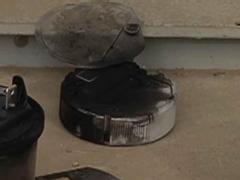
Media report on a Smart Meter fire in Bakersfield. “Smart Meter Blows Up At Business”
“On Wednesday, a PG&E technician was called out to replace the meter after employees found the device burned up and lying on the ground. …”Basically it was an explosion. I saw the meter on the ground and the face plate was blew off and the whole meter was blackened. Even the breaker box that housed the meter was blackened by what seemed to be an electrical short,” said Vernon Nelson, an employee. Another employee wondered how safe the meters are in general, especially for residential families? ABC 23 contacted PG&E who said they are not aware of any smart meters catching fire or blowing up. However the PG&E technician told the employee as he was replacing the meter, that he had replaced at least 15 meters around town due to the same problem they had, said an employee.” http://www.turnto23.com/north_river_county/21601647/detail.html
_______________________________________________________________
Wireless Smart Meters and Potential for Electrical Fires
Typical gauge electrical wiring that provides electricity to buildings (60 Hz power) is not constructed or intended to carry high frequency harmonics that are increasingly present on normal electrical wiring. The exponential increase in use of appliances, variable speed motors, office and computer equipment and wireless technologies has greatly increased these harmonics in community electrical grids and the buildings they serve with electricity. Harmonics are higher frequencies than 60 Hz that carry more energy, and ride along on the electrical wiring in bursts. Radio frequency (RF) is an unintentional by-product on this electrical wiring. It may be contributing to electrical fires where there is a weak spot (older wiring, undersized neutrals for the electrical load, poor grounding, use of aluminum conductors, etc.). The use of smart meters will place an entirely new and significantly increased burden on existing electrical wiring because of the very short, very high intensity wireless emissions (radio frequency bursts) that the meters produce to signal the utility about energy usage.
There have now been electrical fires reported where smart meters have been installed in several counties in California, in Alabama, and in other countries like New Zealand. Reports detail that the meters themselves can smoke, smolder and catch fire, they can explode, or they can simply create overcurrent conditions on the electrical circuits.
Electrical wiring it is not sized for the amount of energy that radio frequency and microwave radiation. These unintended signals that can come from new wireless sources of many kinds are particularly a worry for the new smart meters that produce very high intensity radio frequency energy in short bursts. Electrical fires are likely to be a potential problem.
Electrical wiring was never intended to carry this – what amounts to an RF pollutant – on the wiring. The higher the frequency, the greater the energy contained. It’s not the voltage, but it is the current that matters. RF harmonics on electrical systems can come from computers, printers, FAX machines, electronic ballasts and other sources like variable speed motors and appliances that distort the normal, smooth 60 hertz sine wave of electrical power and put bursts of higher energy RF onto the wiring.
Wireless smart meters don’t intentionally use the electrical system to send their RF signal back to the utility (to report energy usage, etc). But, when the wireless signal is produced in the meter… it boomerangs around on all the conductive components and can be coupled onto the wiring, water and gas lines, etc. where it can be carried to other parts of the residence or building.
It is an over-current condition on the wiring. It produces heat where the neutral cannot properly handle it. The location of the fire does NOT have to be in close proximity to the main electrical panel where the smart meter is installed.
A forensic team investigating any electrical fire should now be looking for connections to smart meters as a possible contributing factor to fires. Every electrical fire should be investigated for the presence of smart meter installation. Were smart meters installed anywhere in the main electrical panel for this building? For fires that are ‘unexplained’or termed electrical in nature, fire inspectors should check whether smart meters were installed within the last year or so at the main panel serving the buildings. They should question contractors and electricians who may have observed damage from the fire such as damage along a neutral, melted aluminum conductor or other evidence that would imply an overcurrent condition. They should also look for a scorched or burned smart meter, or burn or smoke damage to the area around the smart meter. Problems may be seen immediately, with a smart meter smoking or exploding. Or, it may be months before the right conditions prevail and a neutral circuit overloads and causes a fire. The fire may or may not be right at the smart meter. Some questions that should be asked include:
Were smart meters installed in the main electrical panel for this building? Problems may be seen immediately, with a smart meter smoking or exploding. Or, it may be months before the right conditions prevail and a neutral circuit overloads and causes a fire. The fire may or may not be at the smart meter.
Any smart meter installed in a main panel might start an electrical fire in that building; it would not be necessary for the unit itself to have a smart meter. The RF emissions from any smart meter in the main panel might trigger an electrical fire at any location in the building served by this main panel because harmonics can and will travel anywhere on electrical wiring of that building.
Is there damage at the smart meter itself (burning, scorching, explosion)?
Was there fire damage, a source, or a suspicious area around the neutral where it connected to the main panel or at the breaker panel?
Was the damage around a lug at a connection on the neutral conductor in the attic at Xanadu? Was there any indication of heating or scorching or other thermal damage around the neutral in the area of the fire?
Was aluminum conductor present? Aluminum conductors that were installed in the ’70s are today recognized as more of a problem for heating than copper wire. Was the aluminum, if present, showing heat damage or melting?
Even before smart meters were being installed widely in California, people who know something about EMF and RF were expressing concerns that this kind of thing would likely happen (electrical fires due to overcurrent condition from RF signal). What is already postulated, and of concern, is that the rising use of equipment that put RF harmonics onto the electrical wiring of buildings may overload that wiring. Faulty wiring, faulty grounding or over-burdened electrical wiring may be unable to take the additional energy load.
That is interesting that there have been similar fire concerns reported across the country. Maybe it would be good for a company to get some fire blast explosion barrier systems. That is something I would want to have just in case there was a fire blast to happen at my work.
What is a device back up battery? A smart meter or a connector? Have you filed a report on this that can be made public? Thank you for your comment.
I work for a company I will not name but we install telecommunications and the maker of product is called Itron. We had a device backup battery sitting in the back of the truck absolutely connected to nothing and the bed of the truck erupted in a gulf of flames…. there’s no doubt in my mind what caused it.
What can We Do Electrically To Keep The Smart Meter From Going Into Fire Mode; or, Blowing Up?
WOW! All of these people and all of these problems with Smart Meters. My 2 cents—PPL in Northeastern Pa., has been threatening me for about a year now with power shutoff if I don’t submit. I have written letters back and forth to their ‘meter replacement spokesperson’, verbally and with signage posted by the meter denied consent , researched facts/figures and sent that to them, then told them I would only accept one IF they signed my conditional acceptance form, stating that they will accept 100% liability should anything happen to my house/occupants etc…of course they refused. My most recent letter will be mailed soon, as I got another shut off notice (had 3 in 10 days sent out), and two messages left in 2 days about this is my final warning, call our office to set up an appointment or we will shut off your power etc…. so since I am telling them that fine, I will accept one, AS LONG AS YOU ACCEPT LIABILITY IN WRITING, and they are the one’s doing the REFUSING (not me), they have no grounds , legally, to shut of my power. I am current on my bills, never missed a payment, and even have a credit balance! Now, I noticed that my bill hasn’t arrived yet, (it’s usually here by the 9th or 10th of the month), so I guess they are going to send it late or not at all and try to say that I missed a payment, so we are shutting you off. I will wait 2 more business days, call after hours and leave a ‘interesting’ message on their customer service line, and if I have to, drive down there in person and overpay another month so I have a current credit balance. If they shut me off (for what reason??) I will sue these people to kingdom come. I will use every available avenue to
bring as much publicity as I can. KEEP FIGHTING EVERYONE!!!!!!! Don’t ever give up!!! In the mean while, start saving up your pennies to go totally off grid. As more people do this, the utility companies will start to loose millions of $$$. Bring as much attention to this as you can, via facebook, letters to the editors of local papers, handouts, speaking up, passing on all the information you receive, starting local chapters, putting up signs in your front yard, writing to congress people, just don’t give in, don’t give up. These things are killlers, killers of the environment, of people, of your health, your privacy, we all know it, millions more are waking up to that conclusion.
Keep the faith.
I wondered if anyone has had trouble with earth current traveling into their home. We’ve had a professional measure our home & the results were dangerously high. Already installed Graham-Stetzer filters thru out, which helps the electrical lines but does nothing for the current traveling into the home via the earth. Any suggestions?
Someone else recently wrote that a similar thing happened where Kaiser detained him for days, he’s seeking a lawyer. Learn to avoid and reduce: https://emfsafetynetwork.org/fire-captain-finds-hazardous-power-surges-follow-smart-meter-installations/
please help me they are testing in hospitals and low income housing emf and radiation and static electricity they are putting everyone with these symptoms in the mental hospital and keep them confined when the are actually giving blood and potassium ecg brain scans they are testing new medication like cogenten I feel like im dying headaches rigging in the ears neck pain joint pain stiffness and they are interested in me cause I am like those people who say its gonna rain they can feel it in their joints I think I have the ssame thing but im much more sensitive to it I can tell where its coming from please help w5 st joes just come look u wil see its evil my heart beats so fast cause of the magnets and its not me I feel mentally sound they can induce voices and heart attack please anyone out there on behalf of my baby jessbanda@Hotmail.com
For nearly every poison there is an antidote. For every technology there is a counter technology. For smart meter harm there is a way to reverse the damage, lower bills (pulses and surges increase the so called “usage”), regain privacy (how can a utility monitor or frequency graph usage without pulses and surges to do so?) , protect health (no uses and surges, no assault on the bioelectrical system that makes humans vulnerable to ALL forms of wireless, but especially smart meters).
The device works by arresting the pulses which cause all that harm inside the home.
And to think that a sine wave tracking device in the circuit box was well as adding an rf choke on the electrical mast at the point of entry of utility generated microwaves on the transmission lines is the solution.
There is a practical way to stop all this harm and destruction.
There is an industrial smart meter suppressor that has been on the market for decades it is called a sine tamer, in the US and is sold by cratus group in Canada.
Anyone I know who has tried it, including me, can measure as feel the difference and vast improvement, right away.
It pays for itself and is warranted for decades. It saves people money because pulses and surges are dangerous but they are money makers. Smart meters are not grounded because this would stop the pulses and surges and the profit. The stabs on smart meters are a mismatch for the jaws of the owner’s meter base.
This is the cause of hot socket. And that is why an RF choke also needs to be used, installed by a professional it is a cheap solution once it gets wrapped around the weather or electoral mast at the point of entry.
The service panel device is designed to “tame” the sine wave before it circles around every circuit in the house, hence it is called a sine tamer.
The tamer neutralises the pulses, while the RF choke prevents arcing behind the meter, as well as stopping electrolysis corrosion of home wiring inside the meter base. The tamer stops microwave sickness which is reaching epidemic proportions because this is caused by every utility everywhere.
The tamer suppresses the destructive pulses of microwaves as well as eliminating dirty electricity.
So a solution already exists. I will attest initially it seems a bit costly, but once one’s bills stoop escalating and one’s health is recovered there savings become obvious, which is why it pays for itself.
Yes it has to be installed by an electrician which takes all of 20 minutes.
We swear by it.
This device is absolutely different from any ordinary lightning suppressor on the market, it captures all those minute emf pulses and has variable clamping inside it to arrest what is making people sick.
The tamer is able to flat line these arson inducing pulses and surges by not merely regulating the voltage as well but by using specific attenuation technology that matches and cancels out the pulses of a smart meter, by using a clever form of suppression./
It is installed at the service panel in two 15 amp circuits, and can share circuit is need be since it carries no electricity of its own.
Make sure the electrician shortens the wires from 18″ to 6″ to 8″ so that it will work properly.
It really does stop the home from being turned into a microwave oven slow cooking home occupants inside.
It would be wise to also use the same thing that most amateur radio operators use to prevent their homes becoming antennas for RF from their radio tower, which is to have a knowledgeable person install a simple wrap-around RF choke that is applied to the electrical mast or “weather” mast located on the outside wall of every on-grid home.
Together these two simple solutions might have saved all these homes and lives.
Note last sentence.
———-
https://www.cheknews.ca/bowser-woman-starts-gofundme-page-after-fire-destroys-her-home-469202/
Bowser woman starts GoFundMe page after fire destroys her home
July 11, 2018
WATCH: The Bowser home of Dominique Mathison and her two daughters went up in flames July 5. Mathison did not have house insurance.
Real fantastic info can be found on website.
If you desire to grow your familiarity only keep visiting this web page and be updated with the latest news update posted here.
Sounds like a Ground Fault Interrupt (GFI) circuit for every circuit in the house and a surge protecter on every device (TV, Computer, anything plugged in ) is in order. They are readily available in any hardware store or electronic shop…
Fires are occurring and smart meters are failing. But we seldom hear anything about these incidents and I believe it is largely because no one is tracking them. I have published a summary of 3 years of investigation in the fires/failures in British Columbia, as well as the systemic failures in tracking and reporting them which, I believe is occurring in many jurisdictions. The report is available at http://www.stopsmartmetersbc.com . The report itself is 38 pages long supported by 600+ pages of evidence and documentation. Please feel free to share. I hope others will do similar investigations in their areas and share the results.
The UL protocol used to certify a few smart meters does not include inspection of some of the most crucial components, one being the remote disconnect switch. This switch has been involved in many fires. Apparently the NEETRAC, an industry testing firm, tested the remote switch used by ITRON, but will not release the results. I was told only industry members get the results and BC Hydro, for one, refuses to release the results, saying it is against the NEETRAC rules. Cute… if it fails we can never be told.
From a reliable source, “UL certified is not the same as UL registered. UL registered means the UL stamp is on the product. UL certified means tested under certain conditions, not all potential conditions but there is no UL stamp on the product for a UL certified product.”
Can anyone send or post on here proof that the smart meters are still not UL certified?
I don’t think these alleged shrewd meters have Underwriter’s Laboratories Certification. I think this might be an escape clause for the insurance agencies to use to decline a case
On September 17, 2015 I just finished mowing our front yard, it was about 0900. I had just entered the side gate to the right of our garage which is the same side the meter can is on. (smart meter installed back in June 2015) I entered the gate with the mower running as I began to mow passed the meter I heard a lot of popping sounds and thought I had picked up something with mower so I let the handle go to kill the engine. The popping continued and as I turned around to look back at what the popping was the meter was arcing really bad as if it was spitting out sparks up to 4-5 feet away from the meter. I had just walked passed it within 4 feet of it. What if the arcing had begun to arc while I was passing it? It would have hit me on the left side of my face and shoulder. I immediately dialed 911 and had the fire dept. come out. While I was waiting the meter started arcing more rapidly and getting hotter. I then noticed the main service line from our house to the telephone pole started to steam traveling from our house back up to the pole. The arcing then started at the telephone pole…it was loud!! I thought the transformer is going blow, but eventually the service line detached from the pole and fell to the ground, in the area of the front yard I had just finished mowing. Once the service line fell so did the meter from out of the meter can. I guess when the air hit that area where the two are engaged the flames grew and went straight up hitting the overhang of the garage damaging the meter can, riser, and the weather head. Thankfully the fire did not enter the garage as we still have a ton of unopened boxes. We just moved in the house at the end of April. Thank God no structural damage was caused to the house just a lot of soot to the outside wall of the garage, overhang and the three other electrical disconnects to the house. I can’t imagine what would have happened if I had not been home at the time. All of my neighbors are at work at that hour of the morning. It caused power outage to four other homes. I thought for a minute there I was going to watch our house go up in smoke. Thank the big man upstairs for having me at the right place at the right time. :{)
What I find criminal is that PG&E used to pay people for their excess energy. Now they just take it thanks to to the Smart Ripoff Meter. By the way, my solar only covers half of my electricity bill so in essence, I am paying for a mediocre system that is not doing its job. I strongly encourage those who want to get off the grid entirely, to do their own panels and have a backup storage battery. You will probably save well over $10,000 to $15,000 by doing so and you will not have the problems with arcs of electricity sent into your home because it is an open line. You will also eliminate the local government, solar companies, and PG&E!
Hiding the evidence- that’s criminal.
P.S.
I forgot to add, the Smart Meter was fried by the arc of electricity. PG&E rushed out to replace that within 24 hours but refused to even look at the other damage.
A couple of years ago, my husband and I purchased solar panels through a Sonoma County, CA program. At this time, a Smart Meter was installed to send the excess energy back to PG&E. We never knew they were going to do this. It was done without our consent. The other night, a man fell asleep while driving and took down a power pole which sent an arc of electricity down to our power pole and into our house. I was watching TV and it exploded my TV, DVD/VCR player, cable box, stereo, telephone, and brand new microwave. Also, it took out five electrical outlets and breakers. PG&E claims they have no financial responsibility for the repairs to my home. The California Highway Patrol cannot give me the insurance information of the driver who walked away from the accident because I was not in a collision with him. Why do people even wonder why good people go postal?!!!
I am sorry to hear this happened to him. He should have been given protective gear. In CA PG&E wrote about how smart meters could start a fire upon removal.
My father is a PSE (power systems electrician), and is a city employee in the utilities department. He was installing one of these meters (part of the citys upgrading system) and had the unit blow up on him. He suffered second degree burns on his hands and first degree burns on his face. Not sure about the cause (happened 09/10/15), but he has a track record of no injury incidents in 30+ years of service in the field.
A couple of months ago, up until now, Ameren Illinois has installed LANDIS+GYR FOCUS AXRe-SD model SmartMeters on ALL of the homes. So far, no issues that I know of, but after reading all of this, we called the Electric Company to come replace our SmartMeter with an analog meter. Apparently, we have to pay an opt-out fee, but that’s a small price we are willing to pay to stop this from happening.
Jason S. who posted on August 23, 2015 about your neighbor’s fire, I’m in Battle Creek and smart meters are being installed here now. Can you tell me more about the house that caught on fire? The address or anything else? Thanks!
Jason, please get in touch with us ASAP at the Smart Meter Education Network (.com). We are a Michigan group in the thick of fighting smart meters. We desperately need reports like this. They have to be verifiable. Thanks so much. Our email is smartmetereducationnetwork @ gmail. com. You can also call us at 972-2677, area code 734.
Linda Kurtz
Director
portage, MI our neighbor’s house caught fire as a result of a smart reader. Just happened on 8/22/15
Smart meters are a very dangerous thing. They could cause explosions and fire. My advice is to be extremely careful with them. Best regards!
Smart meters are digital and can be on electric, gas and or water meters. Electric analog meters have a spinning disk, smart meters have numbers that flash. Search google images for “smart meters, gas, water. How you get rid of it depends on where you live. Contact your utility. Also, Here’s some ideas about how to get rid of them: https://emfsafetynetwork.org/smart-meters/action-now/
How do we know if we have a smart meter and how do we get rid of it?
I wanted to discuss switch mode power supplies (SMPS). I am sure there are accurate accounts above about “Smart Meters” having safety problems here but jumping to conclusions about it being caused by the use of an SMPS power supply is probably not where to look. Let me explain.
SMPS are super common now. Every laptop and desktop computer uses a rather large one, from around 45 Watts for laptops to 1500 Watts for a gaming system or business class server. Modern cars probably have a dozen of them (inverters which convert DC to DC are also a class of SMPS). Every cell phone and tablet adapter and practically every little black cube shaped “wall wart” power adapter is a SMPS.
If SMPS were universally dangerous you would know a lot more about it. Hell you couldn’t get on a plane with a laptop, and dorms would burst into flames on a nightly basis. I’m not saying SMPS aren’t grungy and causing noise on power lines. They do. As an audiophile and computer-phile I worry about this but NOT for safety reasons, more for what they, like the average light dimmer, do to pollute things like the video and sound when watching a movie. That the Smart Meters use one, probably consuming around 10 watts or less, is not, by itself, a reason for concern. Of course, any idiot can make a bad power supply, and Smart Meters may be blessed by just such an idiot. 🙂 I’m just saying that having an SMPS, which does cause noise, transients and other “grundge” on the AC supply, is not by itself a safety issue.
On the positive side, please note that SMPSs are good for the environment. They are much more energy efficient than the alternatives (sometimes called linear supplies to differentiate them from switched, or digital supplies) therefore we produce much less greenhouse gasses and can have more cool devices with them than we could without them. Now if only they were less noisy! 🙂
Thank U! You helped me a lot. Was looking for this stuff but so well as you no one can explain this stuff.
good piece of work
Just got this story from Sharon Noble, the director of the Coalition to Stop Smart Meters. Hadn’t heard of it, and didn’t see it on your list, so thought you’d like the link: http://www.walb.com/story/28127297/one-killed-in-warren-co-house-fire. I’m trying to call the Warren County Fire Department, but I must have the wrong number, as no one is answering on a Monday at 10:35 a. m.!
Hope all is well with you. Thanks for all you do! 🙂
Terri
http://www.stopsmartmetersGeorgia.Org
Stop Smart Meters Georgia Facebook
I have a new invention that will save lives, firefighters, first responders, homes and buildings from electrical fires from Smart Meters.
It is a FUSIBLE WEATHERHEAD; a weatherhead is where the electrical utility companies’ power comes to your house/building. This FUSIBLE WEATHERHEAD has a metering device that can detect the voltage, the amperage, and any spikes in the power grid. It has LED lights in it that tell the condition of the fuses; for the first responders, firefighters, homeowners, to know if the fuses have blown and is safe for them to distinguish the fire without getting electrocuted; so you don’t have to watch helplessly, your entire house burn to the ground. The fuses in the FUSIBLE WEATHERHEAD would open the circuit and shut the electric power off going down the wall into your house/building, this would eliminate the arc flash. There is a DB9 connector in the circuit board of the FUSIBLE WEATHERHEAD that is connected to your home computer for monitoring the electric utilities’ power coming into your house/building. With this computer program you can balance your panel box; it will read if there has been any power surges; which can start fires. This will give the consumer the exact usage of electric power used in your home/building. Now WE become the “big brother” WATCHERS over the electric utility companies.
In regard to the fire(s) in Reno:
The statement: “Consumed meters can be caused by a “voltage overload” in the home–is an incorrect statement.
Voltage comes from the power company, not from the home.
(120/240 volts)
Power overloads (amperages) are controlled by circuit breakers within the home. For example: If you plug in a kettle and operate your toaster on the same receptacle, the 15 amp breaker will trip. Your built in “safety factor”.
Records show that our home power worked just fine with the analog meters. With the smart meters failing or catching fire we have a problem! Power companies blame the customers wiring or the power panel or anything but their “deployed smart meter”
If these power companies replace a transformer on a power pole, and it fails, do they blame the wiring?
As Spock would say:”Most illogical Captain”!
Posted on Stop Smart Meters!
I am in Lumberton, Ms. and did not even realize I had smart meters until we had a fire. I had a meter on my kennel and another on my home. We had been in kennel an hour before, was outside and only had gone inside for under 30 min. before nephew ran in saying kennel on fire. We immediately ran to kennel to rescue dogs. The entire kennel was totally engulfed in flames. It was an L shaped 1600 sq ft metal walled structure and was a total loss. 3 dogs & 1 puppy died and 4 seriously injured. I was also burned. Dogs had 25 ft runs from building and still were injured/died. Not normal fire. Normal fire would have started in one area and worked through building. Entire building was engulfed! Meter pole 12 ft from building had smart meter and metal box for meter was blownout/melted away on left side. Pole was burned and encased wiring from panel into kennel was melted. Fire marshall will not commit yet says never seen anything like it and kept coming back to meter as source!! S!
ays electric comp. has too much money to fight and getting them to accept blame would be impossible!!! I am scared to leave home since it also has this meter. Another potential problem I have is a neighbor let Verizon install a cell tower on their property, next to my fence!!! It also has a generator which I have been told can potentially cause a power back surge if the switch delays when the generator kicks on. My house has a new transformer, yet the kennel had an old transformer. Not to mention tree limbs that we had requested them to remove, yet they did not because the limbs would have fallen on neighbors property. DOES anyone have suggestions on a course of action I can take??????
8/28/2014 BC Hydro smart meter on fire/ severe damage to home, see video http://www.cheknews.ca/fire-sooke-lake-road/
There’s a back story to this.This video was analyzed by a woman fire chief who determined that it was a smart meter fire, no question. But they refused to listen to her and did the same old same old. These lies are so transparent and consistent, they all use the same playbook, the same phrases, the same murderous cover up, and they all assert only one thing. The sole thing in the world that is NEVER the cause of any fire is a smart meter, NEVER.
The OSB board is there to cover up the “giveaway” pattern on the white stucco which, along with a carefully paused video, now yanked, gave away the fact that this was absolutely a smart meter fire, not the pretext supplied afterwards of a cigarette in a planter that did not exist, as verified by google street view BC smart meter fires are being systematically covered up, no small part of which includes collusion by a fire chief way outside his area of expertise,who was paid to write a paper that is part of a huge cover up.
And since wireless owns the media, although the sheer number of fires has dramatically risen since deployment, smart meter fire reports in newspapers never happen. The reports never use the word electrical, or the term smart meter, just the words “cause unknown”, and one never hears the cause at all.
What city,state is she from?
My grandmothers home was built in the 1920’s. About 2 years ago our small town received smart meters, a year after becoming a widow, for the second time. She has lived in this town for over 40 years, running a small business and supporting many along the way. 2 weeks ago Friday her power went out and after calling the electrician she has used for the last 30 years was told her power problem was that her wiring was old and simply caused a fire at the meter. Not understanding the electricians estimate of over 2thousand, I called the electrician myself to understand what was going on.
I was told that although it was the meter that melted, the reason the power went out could have been, “the wind”. And the financial burden of re-doing all the electrical fell solely on her. As I pressed for more answers as to why the meter box needed to be moved and completely replaced I began to feel a sense of Bullying by the electricians assistant. She had convinced the power company to leave on a leg of electricity so my grandmother did not go without, however it was implied that her electric was Without permit or inspections.
The power company employee quickly took the melted meter to his truck. It was a very strange situation. In the 14 years I’ve been here for my grandmother I have not heard or seen her treated with such disrespect. She was told if she did not give the electricians a two thousand dollars her home would be condemned.
Not only is it sad these older homes have not been declared exempt from smart meters, but their elderly residents are being forced to upgrade electrical systems that worked fine until the power companies decided they wanted to not only read power wirelessly, but keep tabs on all of their customers. One of the things that bothered me was my grandma was told she may want to consider a pacemaker in the future, and her power box sat at the door, you had to walk by it to go inside, we didn’t receive any information about the dangers of smart meters and pacemakers. My grandmas biggest concern is the financial burden put on people her age. While she was able to afford the bill, she knows that many of her peers would not have the 2,000 to immediately hand over. With these electricians being so buddy – buddy with the power company and no one standing up for the homeowners vs the power companies who knew there were malfunctions between smart meters and older electrical systems yet installed them anyway and passed on any burden, either fire or financial to homeowners who had no choice. This is a ngionwide mess, and we need to get together and hold these power companies responsible, if not for ourselves and our individual problems, then for the others who will have a problem in the future.
if my grandma wrote her check under duress, others have been treated the same way also. How can we help? E-mail me with any ideas, groups, or petitions. This is my grandmothers position and I want to help her be heard. Mzupkow@yahoo.com. Thanks for listening.
Today, our recently installed Sensus smart meter caught on fire. We were lucky…as I was leaving the house, I saw black smoke coming from the side of the house. When I got out of the car and ran to see where the smoke was coming from, there were flames coming out of the meter. Our neighbor just happened to be home on a lunch break, and he came outside to see what was going on, ran back to his house and grabbed an electrical fire extinguisher and put the fire out before it spread. It did burn some of our house siding and fence, but I hate to think about what could have happened if I hadn’t seen it and our neighbor hadn’t reacted so quickly. When the fire department arrived on the scene and checked the attic, etc., they then called the electric department, who immediately came out and replaced the meter with ANOTHER smart meter (what?!). Now my concern is what if this occurs again while we’re sleeping?!!! I guess I won’t be sleeping very well anymore! And, for the record, I’ve had old electric meters for the past 55 years, and I’ve NEVER had this problem before…and I haven’t known anyone in all these years either that’s had this type of problem…until the new smart meters came on the scene. Something needs to be done about this fire hazard!!! I guess it will take more lives being lost before somebody decides to recall these meters.
It’s YOUR METER SOCKET
The meter base is the property of the property owner.
Like its mate, an analogue meter, the analogue meter base or socket is safety approved for a reason. Neither the socket or the meter is meant to operate without the other half,
No one, temp or not, has the right to tamper with an owner’s own safety approved meter socket or touch it or the wires leading into it.
Nor do they have the right to install any meter under live load.
Nor do they have the right to install an electrically incompatible NM&CN (Network Management & Communications Node) transmitter device on an analogue meter socket.
Nor should any customer pay to have their own electrical system operate the smart grid for utility profit.
Labourers etc. are literally not allowed to touch the owner’s UL safety approved meter base. To do so VOIDS its safety rating and compromises its insurability.
It is the property owner’s analogue meter socket. It is not designed for this fake “upgrade ” to a sparky device. This is a highly combustible computer transmitter with a low flash point and a dangerous RD internal switch which shuts off an inherently volatile whole house electrical system remotely, electronically . Your meter socket is not meant to have for a microwave enabling and generating computerized device with four prongs jammed on to it. It is especially not designed to withstand a sparky meter with a Remote Disconnect/Reconnect RD switch which has already been identified by investigation re Saskpower to be a “systemic design flaw common to all smart meters”, rendering these RD remote switch devices easily able to overheat this low flashpoint grid node to the point of combustion.
Your local government is succumbing to a utility redirect tactic – the SAR deflection.
They will be held legally liable for so doing.
Human exposure is not the local government’s primary area of responsibility, even though it is both serious and relevant to the larger issue.
The government area of primary responsibility and liability concerns their lack of due diligence regarding these (weaponized as applied) frequencies, which violate building specs, compromise structural integrity, corrode metal, arc and overheat wiring, cause ignitable static fields in the vicinity, and spark inflammable sources. If this sounds like a description of potential arson, that should come as no surprise. These devices are dangerous and are in violation of all the OTHER codes for safety which govern safe electrical code compliance and safe vibration limits for structures and reliable building tolerances.
These sparky devices effectively void occupancy permits, and liability insurance and engineer’s errors and omissions insurance.
Any municipal or regional government is liable if they ignore hard facts and allow any utility to use the misleading SAR human exposure guidelines as a distraction from the real provable legal issue – failure to pass or meet code. Certainly the SAR dummy represents junk science, which begs the question of why this shell and pea standard is the only safrety standard for the whole globe. The SAR dummy “test is not even carried out in situ and is in itself a sham and a scam.
In this communications network application the utility use of SAR serves as a redirect in order for utilities to successfully distract local governing bodies and do an end run around flagrant violations of structural laws concerning building specifications and limits.
Electronic geeks dream up devices, while clueless about electrical code, building code and engineering code. Essentially the smart grid is a geek’s office network, applied to a global transmission system. It is a classic case of the sorcerer’s apprentice messing with what is outside the parameters of their narrow level of electronic expertise with indifference and disregard for the laws of electricity. In short, the grid is no different than a sub prime energy derivatives market, a hit-and-run short term market bubble, and a long term recipe for global systemic failure of disastrous proportions.
According to work safety standards in many locations, phone line workers are not even permitted to work around live smart grid collector hubs located on utility poles. Yet people live with them outside their bedroom windows.
Elected officials and administrative staff for every local or regional decision making body are answerable for their own failure to dig down and demand that the smart grid meet legal codes. This makes those you elect to look out for your best interests legally culpable for any choice they make to ignore utility violations of electrical code, engineering code and building code.
8/28/2014 BC Hydro smart meter on fire/ severe damage to home, see video http://www.cheknews.ca/fire-sooke-lake-road/
There is a real story to this one.
Go to a full screen to watch the news video.
Watch the firefighters and the action regarding the smart meter in the video. Look very closely.
Use the pause button. Take screen shots. Break the video down into still shots. Then note the smoke smudge sunburst pattern on the white stucco wall, all around only the top smart meter. The disc below it is from the former 100 amp service. Examine the smoke damage.
Even a lay person can tell that this provides a clear indication that this was indeed a smart meter fire
Then ask yourself why they removed the tell tale “black and white” fire pattern, and covered up the smudge evidence on the white siding by quickly covering over the wall with OSB board, after concocting a story about a cigarette in a planter.
Too late.
The video tells the truth.
@Michael
“Smart meters are also necessary once end users begin to generate their own electricity through the use of solar or wind or other means…”
No, they are not. You are sadly misinformed.
Smart meters are benefiting the utilities bottom line. Customers are getting ripped off and will continue to be ripped off as these cheap plastic meters break down, wear out, and their useful life is used up two to three times as fast as the electromechanical/analog meters. Smart meters will be found to be one of the biggest losers- the biggest consumer rip-off- the biggest government financial waste and the most toxic global deployment since asbestos.
“Smart” meters or automated metering is here to stay. To increase efficiencies in our use of electric power these meters are a fundamental component at the residential/commercial user level. Granted there are some technology tweaks or hardware issues which need to be resolved as one tries to fit a one-size fits-all meter to larger variety of end users out there.
Smart meters are also necessary once end users begin to generate their own electricity through the use of solar or wind or other means, and store energy with the use of electric/electric hybrid vehicles. What these fires do suggest is that more rigorous standards and testing are required.
It was an extremely traumatic event. I read in the comments about the hydro companies paying off the insurance companies and that was exactly what I expected would happen. Insurance pays me Hydro pays insurance we get screwed. In my situation there are actually three insurance companies and the same investigator was hired for all three, my contents, my landlord house and the owner of the other side, it was a Semi… Unfortunately the other tenant did not gave contents insurance. 🙁 She didn’t have fire, only smoke damage, but was displaced for months.
I’m thinking about pursuing this further with a lawyer for damages, just don’t know if I would have a chance. I also want ppl to know these are not safe and there should be a government involvement to ensure public safety, since clearly the hydro companies have not!
My concern is that my “smart meter” is next to my propane tank and I fear that if the meter catches fire the propane tank will explode and the flames will back up into the house. I am going to fill my “opt out” form this weekend and get LPEA to remove the thing before something tragic happens.
We live in Fallon Nv and also not one of our breakers tripped which was weird.
Lost our home Dec 28,2013 6 mos or less after smart meter installed no breakers tripped lost everything. Arching in laundry room wall. Dunno if it was the cause a few diff fire people said it was a weird fire, but our investigator ruled it accident. Makes you wonder we werent home but lost family pets, and what if we were? I really hope its not a smart meter prob and if it is I hope they are held accountable.
I’ve written to the Maryland governor office, attorney general office, public service commission, and U.S. Public Service Commission, that the Maryland public service commission is allowing extortion to take place for the unsafe installation of Smart meters. Come July 1st, those who choose to opt out will be extorted $75, and $17 a month for not having a Smart meter. Public Safety, WiFi, Property safety concerns were all mentioned in my communication. The Attorney general office tells me that the public service commission office’s own attorney general office is the only one who could address my concern. The public service commission office believes they can’t do anything to completely oppose those fees. They can. It is a hazard. It is time we stopped paying for private corporate greed, and extortion for services not rendered.
@Meter Guy: Gibberish. Apparently English is not your fist language.
If you are not having any problems with your electric until after the smart meter is installed then the smart meter installation, or the meter itself, caused the problem.
The point of all this is, IMHO, people are being forced to pay for a service change that is unwanted. This change is also causing house fires!
As someone pointed out: The cost of solar is becoming more affordable. Disconnect from the grid and make your own electricity.
Whatever happened to neighborhood sized fuel cells???
Wow did not know there was so much talk about something that is so specialized and everybody has an opinion MMMmmmmm, first of all houses are wired when ? and then you change out a meter and it blows… and its a new meter Ha Ha thats like saying I just bought a carb for my car and the engine blew its the carbs fault…..
Metering is an odd ball in the wrong hands it will blow but normally what happens is the voltage from the utility is counted times the current of the customer and the data is sent to the utility to be billed…in Kilowatt hrs…
So whats the problem, is that you live in a circuit yes you do your whole house is wired for what ? so you can watch a TV and a Lightbulb… to do this you need to be connected to the grid your meter socket was installed in the house that was built lets say 50 yrs ago heat cold snow rain ect… then the meter was changed brand new one in fact then blow bam ect… how may refrigerators over this time ran thru this socket what and you never replaced it Oh what no one told you !!!!! well your hearing it now….
Now the Makers of all Meters is the difference here do they all do the same thing YES
are they all rated yes but like cars some have problems but that said once a utility finds out there is a problem they are all over it why because of you …..safety is always first so the meters were made to tell the tempeture of the meter itself High current will show it self in the temp and will send the info to the company to rely to the customer …
bet you did not know that….this part is just starting to take off some companies are just learning now how to use this function…any questions
Until or unless you are willing to cut the drop and make your own electricity, or do without, this will continue. A rooftop of solar panels and a garage full of batteries is looking better all the time.
Addendum…below the link about the opt out is what I wrote the public service commission in Maryland. Hopefully this gets through to them.
It appears Maryland is allowing utility companies to extort money from those who opt out of having smart meters. Here’s the document
http://webapp.psc.state.md.us/Intranet/sitesearch/Whats_new/Maryland%20PSC%20Establishes%20Smart%20Meter%20Opt-Out%20Fees.pdf
And want to alert you this is nothing more than a scam from the electric companies.
It is extortion. It forces people to pay for a service they do not benefit from, nor desire, nor need.
It is a violation of 4th amendment rights. It intrudes on my privacy, when I use my appliances, and provides evidence when I’m home, and when I’m not. This is something that a thief would love to have knowledge of, as a matter of course, many appliances already have smart chips that will communicate to these meters, thus allowing thieves to know when I use my TV, my microwave, etc… And I have no control over which appliances may have that smart chip. Thus I don’t know what deterrent I can use.
It is a violation of section 508 accessibility laws for the internet. Yes, it prevents people from having their own WiFi at home, and forces people to use much more costly ethernet wiring.
It is a fire hazard. https://emfsafetynetwork.org/smart-meters/smart-meter-fires-and-explosions/
When the electric utility, Delmarva without my knowledge or consent trespassed onto my 200 foot long driveway when I was on vacation to install a smart meter, and then put a tag on my door they had done so.
I found when I got home that every day until I got them to put back the old meter I was having power outages. The claimed reliability on your page, is patently false. This happened in the middle of October when no heat, nor air condition was in use, and my electric use was minimal.
You should rethink allowing the utilities to charge people any amount for services not rendered. That is just plain extortion. $75 for an up front fee is still too much. I’ve not yet been charged, nor will be until July 1st, as the attachment below [sent the public service commission a copy of my 60 day notice] indicates, but I protest any allowance of any charge for those who have opted out. Only people who desire the smart meter should be charged fees for it. If they utility company can’t charge them enough money to recoup costs, they should not be allowed to offer the service in that area. Already the utilities charge more than they should. Already they offer thermostats for people without smart meters that can power down the usage at random times. Even that is bad enough, because it could be that they might power down my cooling system just when it is seriously hot, or power down my heating system, when it is seriously cold. We have no access to gas lines where I live. Nor oil lines. So a heat pump that is electrically based is my only choice. Unless the state wishes to subsidize solar or geothermal at 75% or more, it is cost prohibitive in these neighborhoods to allow the Smart Meter.
Please rethink your allowance, and stop them from starting charges before July 1st.
Be sure to send the bill to your utility!
My tenant, at a condo that I own in Oklahoma City, had a Smart Meter installed and it
burned up the Air Conditioner. The Heat and Air specialist who relaced it said it was
caused by the Smart Meter that caused it and said “it happens all the time”. It cost me $2,650 to replace it.
A Smart Meter was installed on my house maybe five years ago. I noticed that the meter was not well aligned with the cutout in the box but never bothered to have them look at it. Well, during last winter we had a strange occurance. Several GFI breakers in the kitchen tripped and some of my circuit breakers tripped. I reset them all and everything seemed okay. I never found a reason. About a week later we smelled burning plastic one evening but couldn’t find where it was coming from.
Fast forward to March 31. I received an electric bill with no power used. The start and end reading matched! I called the power company. On the following Monday they came out. They pulled the meter, which was charred on the back, and disconnected the drop to my home. They said a loose connection in the meter base caused the problem. I replaced the meter box and the next day they plugged in a new meter. We went through a night without electric and a refrigerator full of spoiled food. I examined the old meter box and truely one of the contacts that the meter plugs into was loose. This took 40 years to occur.
My conclusion, based on experience and common sense, is that when the contractor slammed the new meter into the socket he did not align it properly which either loosened the contact or put extreme stress on it. During the heavy electric useage last winter the high currents caused increased voltage drop across the compromised connection thus generating heat. The heat conducted into the meter causing plastic to melt in addition something in the meter failed. About a foot of the aluminum conductor attached to that terminal was severly charred as well.
Someone needs to follow the contractors that install these meters and spot check the quality of their work. Not being company employees they have no motivation to do quality work.
Are you willing to share that video of explosions?
My smart meter burned 14 months after installing by power company.melted all wiring insulation and and connection have evidence of faulty component inside meter. also video of other home in area displaying explosions.
I own several properties , I just bought a house with a smart meter and the lights flicker and pulse and the electric company won’t swap the meter I’m worried my house will burn down
30 yr old home North Dallas TX area – after Oncor smart meter install started experienced flickering lights (about 45 days) on circuits on one main bus – then total random outages – come to find out it’s a heating up arcing and subsequent weakening connect of the wire clamp to the socket’s main lug to the meter – socket otherwise was in ‘as new’ shape.
I read this article and people’s comments and finally realized about the smart meters. Before installed the smart meter, I had my light flash wireless receivers when a phone rings or doorbell or fire alarm or baby cry sign. All worked fine. Everything was fine. Until ten years later, the smart meter was installed, I don’t know how long it took then one day, my dog jumped me and ran back and forth to the basement and she tried to me pay attention. I followed my dog to the laundry room and saw the outlet was on the fire. I ran to the fuse box and shut off. I grabbed an extinguisher to put out the fire. The outlet is for washer and dryer. The outlet is located next to the wall to outside of house wall of the smart meter. I was so happy the house is safe. I replaced a new outlet. Next day, a bathroom light went out. I replaced a light and found the burned cap. I replaced a new cap.
After the laundry outlet fire, my light flash wireless receivers don’t work any more. I borrowed my friend’s equipment to use. But it doesn’t work. I hired two electricians to test and replaced all outlets. They couldn’t find any problem to cause. My other friend brought his equipment to test. All doesn’t work. I put my things away in the storage. I use extra cord connected to the doorbell, phone and fire alarm…only one room. I was in the other room and my several friends and my mother came over and knocked or doorbell…hard to get me. Only way they text me and tell me they were here.
I wonder it could be smart meter…is the smart meter caused wires inside the wall to my light flash receivers stopped working?
I have sad news. The power company has their easement and installed four cables (cantaloupe size) six feet deep, the pad and the utility box on my property. Easement means they have their rights to take part of people’s property without ask for permission, buy part land or pay some amount or no free electricity bills. I hate easement. I want easement be removed or deleted. Stuck. The utility box made me crazy…it called eyesore. I have distracted driving when I drive and see the utility boxes anywhere since they installed the box. I work on to get back to normal life. I guess it takes time. Sad. All utility companies have their easement…put anything on the people’s property like this smart meters, also gas smart meters, and water smart meters, too. They don’t care about the people. All care about electricity, gas, water, sewer, telephones, and TV/internet cables, etc. The government has easement, too and they take people’s property. No matter what they want. The people can’t.
I do not have a smart meter.
I have offered a Courtesy Notice (CN) (an offer to contract) to my local utility monopoly and we are now in contract because they called me on the phone to offer installation of a smart meter with their legal, but not lawful, new definition of the term “opt-out”, a practice of slight-of-hand practiced by most utility monopolies these days. Under that plan, opt-out means you still get a smart meter, but supposedly it does not transmit, and extra fees and monthly charges are applied that no one else has to pay. I do not consent and would be therefore harmed, thus the CN. Meaning that they can put a smart meter in, but they would have to pay me. And BTW, I am prepared to move out if they install one or do a shut-off.
Last week they installed smart meters on all condos in my complex, but skipped mine. I suspect I have not heard the last of this.
I am energy sensitive and so are you, whether you know it or not. Your local utility monopoly knows of such toxicity, but they say they don’t to keep peace with the cattle.
I suffered for 15 years with severe health problems before I found the reason was the non-ionizing radiation coming from the energy grid and certain electrical devices. I have filtered my complete condo for the toxic non-ionizing frequencies coming from the wires inside the walls for $300, have a meter, $100, and have added more filters of of new manufacturer, and have a small device that neutralizes frequencies such as WiFi. My computer is connected by wire, not WiFi. The day I put in the filters, all my health problems went away. Yes, on that very day. Never came back.
My local utility monopoly let out that they will not turn the smart meters on until all homes are thus metered. That makes me suspect that they get turned on a little when newly installed just to read the whole house usage, and in months or years is when they turn them on ‘for real’, metering each and every one of your appliances of any kind and boy will your usage go up (in flames).
Remember, it costs much less to read the old meter than the cost of metering with smart meter and they lie about that by reducing the real estimated cost in one community, $10 billion, reduced down to $2 billion for public consumption, to keep peace with the community cattle. I suggest that you are not cattle and should say so.
Quit respecting these people, but be friendly and nice to them, even though they are criminals. Lying to the public like that. Educate their paid agents as to the real story.
I made a rousing speech to my local Stop Smart Meters group. One symptom of 15 years of ill-health that I mentioned in the speech, but certainly not the worst symptom, was the 15 years of ‘menopause from hell’. After my speech a woman certainly too young for menopause, and she said so, said to me that immediately after installation of her smart meter she went into menopause. And that is with the low dose, not the ‘for real’ dose.
They know about this and have known for decades, probably since the late 1800s at least, which is when the electric grid was first installed, and when cancer, heart disease, and diabetes rate began to rise. It got much worse after the snake-like fluorescent light bulbs were invented as a result of oil embargo in the 1970s. And all such toxic non-ionizing frequencies travel over the the utility lines. And surprise, surprise, is quite easy and cheap to fix.
But the smart meters are WiFi, and will use a lot of energy to spy on us, ruin our health, steal our money, and possibly other nefarious deeds.
I did not suspect the nefarious deeds part of this until I saw the following video. Make of it what you will, if you suspect possible faul play with this journalist’s vehicle by remote control:
Was Michael Hastings Murdered?
http://www.youtube.com/watch?v=hFx4EqJ9glE
Love, Susan
See this thread comments for the Texas attorney who’s won a smart meter fire case already. If there was a news report on this fire, can you post it here? Good luck.
On Sunday 8/25/13 at 5 am, asleep in bed, I awoke to explosions in my backyard. Seeing this I immediately went outside to investigate finding a fire was started coming from the smart meter on the back of the garage.
With explosions continuing, and fire getting bigger, eventually engulfing the garage, I quickly realized I was in over my head.
Electrical damage is severe. 200A service total trash. Line fuse on the pole never took out the service, so it kept burning. Guess smart meters aren’t quite that smart.
The power company (Centerpoint Energy) was johnny on the spot. While the firefighters were putting out the fire, CNP replaced the line fuse and took the smart meter with no contact with anyone.
Ontario Fire Marshall:
“Since May 2011, there have been seven reported incidents of smouldering fires and/or explosions involving either the electrical smart meter or the meter base to which it is mounted. Anecdotal information indicates that these incidents resulted from a meter base problem, an installation problem or a failed meter.”
Where are your from? Who is your utility? Do you have a Smart Meter on your home?
I need help I have seen high elecrical field get pulled off power line at my house have been looking for the source for 6 monthes untill I read about smart meters all of my appliances have burnt up 4 times my ears ring high pitch when in house the water sofener doing electrolisis on sodium cloride water ph of 11 alklinity and hardness off the chart copper casing of phone line melt when ungrounde I saw a lithuium phone battery crack open 50 volts on all ground wires my hve lit led bulbs off them I. Get shocked so bad in my house it drops me to my knees I have had the power company and 2 electricians look at it now there just pointing fingers at each other with nothing geting fixed.
As I read these frustrating posts sadly all of them miss the true target. It is NOT evil oil companies but the dolts that think “Green Energy” is the way of the future. There were NO problems until Mr. Green OBO, or Bush with his corn for fuel idea and all the Whacked Environmentalists, vehicles are being destroyed but idiots like Daryl Hannah, TBoon, et all continue. Too bad the face lift idiot did not fall out of the tree in South LA.
Live next to a windmill farm and see how noisy it is and enjoy the EMF it produces. Solar panel farms in the desert were broken panels are just allowed to fall to the sand and we don’t have to speak of car companies like Fisker do we? Not to mention, the elite do not have them, only YOU do! I would say wake up, but you are living the nightmare. The only thing “green” about this energy is the money leaving YOUR account! I am for a clean planet out of common sense, however as they insert another ring in your nose with a leash how free are you. I have NEVER heard of an analog meter doing this, even SCE employees opted out, but clown organizations (CPUC) that are appointed are not beholding to the voter and let electo comps install SM so when they finally said. well you do not have to have them.. too late.. installed. Do some research on San Francisco residents wanting Green, now that Nanny Meters been put in people are mad, putting foil to stop the RF (tin hat syndrome) but too late.. In efforts to break a society that was decided over a century ago, they think ugly propeller driven generators and solar panels where <90% are not made here is smart. Chew that bitter pill up in small chunks gang and swallow, those that voted for this ilk will NOW reap those rewards. Remember "As they fiddled while it burned.. well, now they text while Capt Edward Smith aims for the iceberg. Unfortunately, your stupid decision is taking us with you and there are not enough life boats.
USA the country that once dominated by power, intelligence and pride.. now they are just words.
My 80 year old mom was dying, dizzy all the time, falling, tired, no color, headaches, sleepless, confused, chest pains and more ….. test after test but nothing….she even died but was revived during one test, all provided no answer. They put her on oxygen 24/7. Thankfully for people that are sharing information on these Death meters. I started searching and found others having the same issues and blaming the so-called smart meter, which is by the way, the greatest oxymoron of all times.
We ordered the removal of the death meter and mom’s health started to improve with in two days. Now two months later, she is up and about, active and doesn’t use the oxygen tank any more, she is nagging at me again, has great color, spunk, energy, no more headaches, dizziness, or seizers, she is no longer falling to the ground or confused and is sleeping well again.
We are not happy paying an extra $12 a month to opt out but if that is the price of life, it’s a hell of a good deal.
PS my mom’s pacemaker manufacture warns against smart meters and radiation/RF EMF…. however the utility company didn’t not warn us about the possible effects of these death meters which they installed without our knowledge and the PUC doesn’t seem to care. But that is not news.
Again thank you all for your input and everyone that is fighting this terrible device, as without this resource and the effort of those before me, my mom would have died by now; that is why I call IT the Death meter.
My smart(DUMB)meter was installed on or around october12,2012-Nov 12,2012. The middle of November My $3,600.00 TV exhibited a snowy picture while me and my grandchildren were watching cartoons. I got up to check the TV, and suddenly the power in that part of the house went off. My grand-daughter and I went outside to check the breaker box and as I attempted to open the box, sparks started shooting from thee top of the box. After reading all of these complaints, I am now terrified to go to sleep at night. Because I know there is a short somewhere in the smart box. I never had any problems until this so-called smart-box was installed. Now I am out an expensive TV. I had to go and buy another cheaper model. GO FIGURE!! GOVERNMENT IS TAKING OVER. SO PEOPLE GET READY!!
i was afraid of smart meters so when i heard they were being installed in Houston, I wrote txu and centerpoint energy refusing them on health grounds–also called them several times. Then one day i was awakened one afternoon with a noise outside my bedroom window-i ran outside and found a man installing a smart meter-he had not rung doorbell even and was trespassing and refused to stop and refused to identify himself and when i demanded he put my old meter back and picked up the box with my old meter in it, he grabbed the box, threatened me and knocked me to the ground. When i told him he better leave now or i would call the police he laughed at me and said go ahead-that he would make sure i was the one that would be thrown in jail. Since he was so certain that he could assault a 64 year old woman with impunity, and knowing the reputation of Houston police, I believed him. He casually continued his tasks and then went back to his truck while I went inside to call txu-who just passed the buck to centerpoint who just passed it back to txu-just before driviing off, the monster that assaulted me did give me his bosses phone number. I called it immediately and that man was a true psychopath. After being mister nice and saying his employee should not have assaulted me (duh!), he told me he used to work for Centerpoint and that he had been awarded the contract to install all the smart meters in Houston and that I had no choice but to comply and that I was to believe everything he said BECAUSE HE WAS A CATHOLIC–I was so insulted by his arrogance and bizarre statements that I started complaining some more to Centerpoint and TXU–TXU immediately started sending me bills that were 3-4 times what they were before the installation, then when I complained about that, they threatened to cut off my electricity with no notice at all…and kept this up until I switched electric companies. THEN Centerpoint sent TWO thugs to my house to threaten and intimate me–when I complained the meter was making popping noises and when I came near any electric plug i felt heat and static electricity and the plug would short out, they said nothing was wrong with my meter and then said if I complained, they would say I was threatening THEM and have me thrown in jail. I told them to get out, and shame on them. THEN Centerpoint had someone else break into my yard without knocking and installed ANOTHER smart meter on my gas line. When I told that guy to leave-that he was trespassing and had no permission from me to install that second meter, he left. Then someone called me from Centerpoint with more lies about how there are no problems with smart meters and then questioned my sanity again for objecting. They said the man had not installed the new smart gas meter…then sent ANOTHER man out who broke into my yard and installed a smart meter-easily observable by the different red tabs but Centerpoint insists i imagined the whole thing. The utility companies in this world are the ones that are quite mad-and murderous. Psychopaths-all of them. Since this attempted robbing and murder spree, half my hair has fallen out-I can’t sleep at night, and i fear my house will burn down from what these meters are doing to my electrical system… and yet NOT ONE PERSON will stop them.
After a smart meter was installed at my home my dishwasher and 46 “Sony hd tv both went out . After being in house for 10 to 15 min started suffering from head aches but head aches go away after leaving home .I filed a claim with Honewell after 2 weeks still havent heard anything after theyr inspector came to check them both . But they waited till meter was changed before they came out to check the equipment . this is in Daytona Bch Florida
WOW WHERE DO I START.
I live in Edgewater Florida. i have 2 Rottweilers and a dutch Shepherd in my yard. i have 12 beware of dog signs. HONEYWELL STILL WENT IN MY YARD AND LET MY DOGS GO. whan i came home i had to search for my dogs. i found 2, but not the shepherd that will bite someone. HONEYWELL TOLD ME… SORY FOR YOUR LOST. WE CAN NOT HELP YOU. Fpl sent me a check for my lost dog, that check does not get me back my Guard Dog. HoneyWell did not care. i get my check in 3 weeks. IT GETS WORST. my air conditioner wires all melted and the condenser blew up out side. my refrigerator power just went out on a different line. my room power is out and wire are melting. some of my fuses are now poping. i do not know what to do. what next a house fire…….. i had no PROBLEMS UNTIL THE SMART METER………..
About four weeks after ONCOR installed a SmartMeter at my home in Plano, Texas, one of the lugs in the meter base broke, causing half of my house to lose power. The lug was obviously corroded, and the new meter should not have been installed in the old base.
I was lucky, in that nothing was burned. The electrician that replaced the meter base for me pointed out that my circuit breaker box, a Federal Pacific Electric, showed signs of having been overheated. So I followed his recommendation, and had it replaced.
Perhaps what you say is true…considering the unsuspecting homeowner is the victim of these fires, why aren’t the utility companies ENSURING installation safety – instead of denying that there’s a huge problem, or paying off insurance companies and not addressing the problem? What utility company do you work for? In California there’s a major cover up happening.
It is not the smart meter. It is the wiring and the meter-base that causes the fire.
I have been removing and installing electric meters for 30 years for a major utility and it is very common, up to 80 percent, to observe fatigue in older and rarely even new meter base wiring. When this fatigue is disturbed micro fractures occur in wire insulation and meter lugs and lug mounting brackets. Micro fractures do not sit and do nothing, electricity is a volatile product and seeks a path of least resistance to ground, these fractures expand according to severity and may last hours or years until ground is established then you have your flash. This is what causes the smoke and or fire not the meter, but the disruption of brittle or faulty equipment/wiring. This is fact. Been there done that.
I had a really difficult day, the other day.
I woke up. The sun was shining. Life was good. I was heading out to take my dog for a walk, and I bumped into a nice PG&E man. We both spooked each other.
He told me that they were getting a “hot meter” alert from my “smart meter”. Heard about those? They are new meters that are internet connected, and speak both to your appliances, and to the head office. Sounds spooky, huh?
Anyhow, he took the meter off, and the clips that I own with the house, were melting and were a fire hazard. Key word: The part “I own”. 🙁
So, in all good faith, he couldn’t walk away from my home, knowing that it was a fire danger, until “I” got it fixed! He put a jumper on it, so that I had at least 110 power, (but no 220) and left. He took my meter with him, so that I had to get it fixed.
Good day: OVER.
I called my preferred electrician, and then realized I have First American Home insurance. So, I called them. They said, “Yes, it was a covered expense”, and they were sending out their electrician to fix it. The electrician they sent out had a bad reputation on Angie’s list.
Well, they couldn’t come till Tuesday.
It is a fire hazard, and they can’t come till Tuesday??? It was Friday! It is 100 degrees out, and I have no electricity!? So, my insurance called until they found someone that could do it, today.
RWE came out, (they had a better reputation on Angie’s list, too!) and ordered the parts, and fixed it, (this, about 5 PM) and called PGE to shut down my main power on the street, and wait till it was fixed, to turn it back on. I had 5 large PGE trucks in front of my house! Yikes!
In the meantime, I found out that PGE had previously installed THREE (count em!) smart meters into my home, since Feb 2010 and all had failed. In March 2010, the house was not occupied. I bought the home in July of 2011.
All three “smart meters” had given out “hot socket” alarms and one had actually melted, and they had come out to change each one, without notifying anyone. Somehow, though, this fourth one is my fault?! I’m a little weird-ed out by this. I also found out that these smart meters are starting fires in homes, by doing the very same thing, this one did. I don’t know if it’s due to installing smart meters into older equipment, or what? But, I found some interesting links about them.
People aren’t liking them at all. It’s kind of a 1984 “big brother” thing.
Anyhow, when all was said and done, after the insurance company said they’d pay for it, well, the electrician called to make the claim and they ended up denying it! So, I paid $720.00 on my VISA for something I’m not thinking is my doing! Do you even know how long this will take for me to pay off? Wah. 🙁 I’m a single disabled woman, and I live from paycheck to paycheck.
I mean, why, when the meter was giving out hot signals, did PG&E not tell me and instead, replace it three times…. but then not the fourth time? I have on record from Portland General that they replaced it once due to it being melted, once giving out a not socket alarm, and once again a hot socket alarm.
Why were my meter clips OK until they installed one of these new meters? Why did the insurance company say they’d pay for it, and then not? Do they do that, sometimes? Did they look up this problem like I did, and find the problems with these meters?
I’m new at this whole home ownership thing, but I think I’m going to be doing some research.
Thing is, I don’t feel safe, even now, after having this thing get hot, melt, and then melt the clips. Is it going to happen again? While I’m out of town, or in town? What’s worse?
I don’t know, but I’m sure interested in doing something about all of this.
Jen
I strongly recommend that all those home owners and/or tenants who now have “smart meters” instead of the analog type to go to the meter area and give it a visual and physical check for any apparent discoloration or burning. Use the back of your hand to check the meter base for heat. (You don’t want to suffer burns on your palms or fingers.)
Some of these installations of so called “smart meters”have resulted in fires almost immediately, or in a matter of months. There should be no heat! If there is, it could indicate a poor connection between the “lugs” of the base and the ”stabs”of the meter.
A fire potential!
BC Hydro says it’s not yet clear what caused a fire at a Coquitlam home where a smart meter had been installed one month earlier.
http://bc.ctvnews.ca/2-home-fires-probed-where-new-smart-meters-were-set-up-1.905587
2 home fires probed where new smart meters were set up
Published Monday, Aug. 6, 2012 4:04PM PDT
BC Hydro says it’s not yet clear what caused a fire at a Coquitlam home where a smart meter had been installed one month earlier.
The cause of the blaze that broke out early Sunday morning at the house on Darwin Avenue is under investigation.
BC Hydro says smart meters are safe and that inspections are carried out before the devices are set up.
“In the vast majority of cases we actually find problems when we actually pull the old meter off. It’s extremely rare that there is any kind of incident after a meter is installed,” BC Hydro spokesperson Cindy Verschoor said.
The Crown corporation also says it has repaired about 1,000 meter bases around the province.
In June, a fire also began at a home in Mission where a smart meter had recently been installed. BC Hydro says the BC Safety Authority is investigating that blaze.
8/5/2012
Smart meter fire on Darwin Ave., Coquitlam, BC.
As with the Mission fire BC Hydro is blaming the smart meter base again.
Problem is that this is a brand new subdivision so how can they postulate that a brand new meter base is cracked, or is an old crumbling meter base?
BC Hydro doubts smart meter to blame for Coquitlam fire
COQUITLAM/CKNW (AM980)
CKNW News Staff | Email news tips to nwnews@cknw.com
8/5/2012
Could a newly installed BC Hydro smart meter be partially to blame for an early morning fire in Coquitlam?
Hydro crews don’t believe so, but they are investigating after a small fire broke out on the outside of a home on Darwin Avenue.
Spokesman Greg Alexis says it appears the cause was likely a faulty meter base.
“The meter base is the piece of the customer’s equipment that we plug the smart meter into. The smart meter is the end of our grid and the meter base is the piece of customer equipment.”
Alexis says damaged sockets are blamed for a series of recent electrical fires, but stresses the smart meter itself isn’t the problem.
Our new smart meter exploded yesterday causing half our circuits to stop working. The men from the electric company asked if I had any work done recently and I told them the electric company had upgraded the meter. He rolled his eyes at me and said, “yeah, some people CALL it an upgrade” and preceded to tell me of other smart meters catching fire. He said we were extremely lucky our house did not go up in flames. Now, I’m going to be a hesitant activist in order to get the word out that these smart meters are DANGEROUS! I don’t feel I have to put my family’s lives in danger in order to make my electric company’s job easier. There is NO opt-out program where I live and DTE told one woman who wanted to opt out that they would just shut her electricity off. Time to put the gloves on…
About 3 weeks ago my Mom who is 76 was at home, when power went out sporadically throughout the house, no breakers were blown. The lights in the living room tv had power. the small bedroom was without power, the bathroom, parts of my brothers room, her overhead light in her room and the appliances in the kitchen. That caused her fridge to stop working. The electic company came out took a look and said that the smart meter had a wire that had came loose or wasnt properly attached which caused this. He supposedly fixed the problem. twelve days later there was a popping noise and smoke shortly after fire. The electric company same man mind you came out for that as well. he is tryin to blame her wiring and box someone must have stuffed cotton down in it he said. The fire marshal told her it started at the smart meter. There have been 4 fires in a week in a small town of about 6000 that were far worse than hers. Which seems kinda high if you ask me. luckily she lives less than 2 miles from the fire station or her house would have been gone as well. Thankfully it was around 7:30 pm instead of the middle of the night. She lost everything that was in the room which was a lot to due smoke and water damage. Was without power for 6 days and lost all perishable food. Please due something about these smart meters before it is to late!
I lived in Laguna Woods, CA until the house burned down on April 3, 2012. Absolutely caused by arcing from the new smart meter. This community of 12,000+ was built in the 60’s and has wiring and breakers that are a half a century old!
Powerful high-tec meters on ancient wiring. The management company, PCM, is not warning the residents of the dangers. How many people are going to have to be injured or die before they finally take their heads out of the sand?
Just recieved a new smartmeter. Not great lights have started to flicker the next day.
We really are being stooged. The people must revolt against all this injustice.
A man from Red Bluff called today to talk about how he believes the smart meter, installed 6 weeks prior caused his house to burn down in May 2011. His insurance company, Nationwide, has paid for the damages, then Nationwide started a lawsuit against PG&E, but withdrew it in 3 months. Every breaker in the electric panel was tripped, and the meter may have exploded. (sounds like arcing) His house was built in 1985. He said PG&E has denied the smart meter caused the fire.
THIS INFORMATION IS UNVERIFIED AND I DO NOT KNOW WHAT BRAND OF SMART METER NV ENERGY IN NEVADA IS ACTUALLY USING…BUT IF THIS INFORMATION I READ ON THE “NET” HAS ANY TRUTH TO IT WHAT-SO-EVER, IT WARRANTS FURTHER LOOKING INTO.
According to the Smart Meters I have seen they appear to be a Sensus brand smart meter. I do not know if these are the original smart meters or the current ones being installed by NV Energy…but I have learned that the Sensus brand smart meter does lacks UL Certification.
• From what I read online many of the smart meters being installed around the country also lack UL Certification.
According to Underwriter Laboratories the standard meter manufactured by Sensus are certified by Underwriter Laboratories but the Smart Meters are NOT! This has me concerned.
• I have read online that some people are learning after the fact that some of the home owner/renters policies and home warranty policies are NOT covering damage claims to in-home electrical systems, HVAC, appliances, electrical fires, etc. if an uncertified smart meter was already installed at the time of the damage.
This is way above my pay grade but it is an interesting information and makes one ponder if a homeowner’s policy or home warranty policy disallows a claim due to an uncertified smart meter, does that make the various electric companies culpable for any/all damages if they are in fact using uncertified smart meters??
If this is the case…how were uncertified meters ever approved by the Nevada PUC in the first place.
We had a short in our smoke alarm and lost power to our master bedroom smoke alarm. My wife and I have also have had headaches at the same time, I rarely get headaches. This all started happening after our smart meter reader was installed.
Did you you report this to the fire dept and fire inspector?
rincon georgia-feb 26th 2012 10pm, brother in laws house burns up, everyone got out alive. they heard loud popping sounds and smelled smoke. fire is out by 11 pm. strangely, in the commotion, no one saw georgia power come in, remove the meter and meter cover, and de-energise the incoming underground electrical line, and then leave, unanounced and unnoticed with the smart meter and cover plate. the next day, when called, they did admitt to being dispached and removing the equipment in question. no one there saw them, no one knew the power line was off comming into the line side of the meter base, and the meter base cover should have been left on the meter base. the fire started right in front of the meter, on the ground.
I don’t think these so called smart meters have Underwriter’s Laboratories Certification. I think this may be a loop hole for the insurance companies to use to refuse a claim..
It happened to me.. and i don’t have a right to sue because state farm is the ins. company and they decided not to persue it… they decided not to persue because there is no study proving these fires, just numerous reports.. and it would cost them more money now then they would get back.. what about the people who could die in each additional fire.
Grossman Burn Center 2615 Chester Avenue, Bakersfield, CA 93301-2014 (661) 869-6135 sjch.us
New smart meter explosion.
http://www.justicenewsflash.com/2011/12/19/electrical-explosion-at-naples-bay-resort-injures-1_201112199285.html
This is dangerous. If your utility will not do anything, there are places to purchase an analog meter as I suspect you did not have this problem before?
http://www.hialeahmeter.com/siphwame.html
I am currently having trouble with the socket where electricity is supplied to the meter heating up and causing power surges. FPL and their subcontractor Wilco is denying it has anything to do with them installing a new smartmeter and the underground supply wire subsequently frying. I’m having trouble getting an electrician to work on it and Wilco will do nothing. Is there anything I can do?
Thanks for posting. Can you obtain a copy of the fire dept report?
Smart Meter fire reported in Diamondhead Mississippi, November 4th, 2011. The Diamndhead fire department and Coast Electric reported to the scene. No injuries or house damage reported.
they are unsafe …….it is with suspicion that i view this implementation of these metrs….even a plan to stagger the emissions from these things to 1 in every 30 houses and on to every 2nd house every 30 days etc…but this is not to be as the rediculous ness of these things going off every minute for what ? …they only need to go on every 30 days for 10 seconds to transmit the months usage …what a bunch of bull shit that you get to logon to your meters usage site to see how you use electricity ,,,gee willacers ,really ,,,this is stupid and specious on the face of the damaging evidence of severe health problems associated with the meters….stalin could not have set up a better way to anhilate 10’s of millions of people with radiation..on top of wifis,,cell towers ,cfl bulbs that emit 30,000 hertz noise waves, etc….yeah i cant wait to log onto my site so i can participate in my own demise ,,,,come up with a safer way to collect energy data or go straight to hell pg$e
coming soon, debtors prisons, after the government makes sure everybody owes something.
that happened to me at work one of my neighbors house caught on fire a day and a half after they installed it . got evacuated in the motor home park i work at as a in home nurses assistant.
Look at it this way. Your taxes paid for the meter that harmed you all. Special legislation does not exempt utility corps from illegal use of a frequency weapon to inflict trespass and harm.
Time to stand up for yourselves.
I hear that ebay and electricity shops are good places to buy an analog meter for about $60. And besides, given that smart meters are illegal, just go get the analog meter installed by any electrician who is willing and who already KNOWS these are illegal devices warned against by the WHO. Then immediately lock that analog meter up tight so thoroughly that no metal saw can get at or shear through the carriage bolts that go inside you home, that no bolt cutters can cut chains, padlocks. Just make it securitized so that no pry bar can remove the good old fashioned mechanical device that is good for 30 years instead of 8.
My son just lost everything He owned when his mobile home caught on fire. He had been living there for two months without electricity due to being laid off from his job and his unemployment running out. I signed for his power to be reconnected. I couldn’t bear
to see him living like that any longer. Within less than an hour everything was gone, and his pit bull was suffering from severe burns and smoke inhalation. We still don’t know if Jedamiah (the dog ) is going to make it. Audie ( my son) was laid off his job that mourning, almost went to prison over $.50 still owed on his legal fees. The power company assumes no responsibility for the fire ( Blue Ridge Electric). I don’t
know if the meter was a smart meter, but it was installed last year. My point being
that while the cause of the fire was undetermined because of structual damage,
it did not catch fire also had an explosion until the power was reconnected. You tell me. The power company now wants a $60.00 reconnect fee. FAT CHANCE!.
A ll this happened on August 10,2011. AUDIE TURNED 42 ON AUGUST10,2011.
Audie’s Mom
My old meter was defect and Portland General Electric replaced it with a “smart meter”. It exploded two weeks later as I walked out my front door. It covered the porch with heavy black smoke and threw me down to the cement. I called PGE seven times and told them that the meter exploded. Each time I called the employees used the same phrase, “smart meters do not explode”. They decided to come out and look at the black meter and burned wall on my house five months later because I complained about the extremely high bill. However, before they came to inspect meter they hit the “kill switch” and left me without electricity for eleven hours in 20 degree weather. I put up a barrier on the porch with a sign that said, “Warning. Do not pass this chair. Meter has Exploded”. PGE is now blaming me for the explosion! Why? I don’t know. There was a PGE inspector’s business card on my front door last week that had a note on the back stating, “You will pay for all tampered meters. You will die.” I called this man and asked why he would threaten my life. He said, I didn’t mean to write “die”. Yes, I have been threatened by Portland General Electric.
We had a Smartmeter installed in our home. On April 8th, at 5:3 AM, our lights started flickering, luckily my husband is an early riser. He hurried over to the inside electric box and saw it explode. The Smartmeter exploded as well. The rest of the family was able to get out safely, but our house is a total loss. An FPL representative arrived at our house before the fire department did!
I have heard several stories of people saying that their house caught fire after the Smartmeter was installed.
Check out what my home looks like now.
Go to this link:
http://www.miamidade.gov/building/regulation.asp
PUT IN FOLIO NO.30-5912-002-0830, PRESS SUBMIT, THEN ON THE NEXT PAGE PRESS GO, SCROLL DOWN. Pretty sad, huh?
They put a smart meter on bedroom wall of a cabin I have been renting for 18 years. It is partway into the wall, a board and batting wall. The first night I was awakened with a wave of energy going through my body. I could imagine my body, the internal rib cavity as it passed through and upwards through my head. I was scared. I have moved into the living room to sleep, it happened again. I have shrouded the smart meter with tinfoil to interfere with the microwaves. I have talked to three idiots reading from scripts at PG&E. The last one said, “It only lasts 45 seconds.” I want to tell him to put his balls into a microwave for 45 seconds and see how it feels. Any other help?
At Raymond Velez: Just read your post about your house fire. I’m sorry to read your problems about your Smart Meter that ComEd installed. I hope you seek a lawyer to assist you in getting your damages paid for. We are in Naperville and fighting our city’s plan to install the Smart Meters. Talk to all your friends and neighbors. Try to keep ComEd from spreading these smart meters throughout Chicagoland. There is so much risk, even more than fire. Best of luck.
Yes, you can sue-see the comment on this page where an attorney has sued and won a case.
i had problems with the smart meter too……..i live in Chicago after they installed the meter i had problems with my lights going off and on in the house called Comed they send someone to look at it….they tightened up some screws said problem solved. Couple days later same probem called Comed again they said get an electrian to look at it ….Make a long story short it finally caught on fire the meter and my electric box lucky i was home to turn it off………they told me since it was in my house it was my problem i had to fix it….but it was there fault for installing the smart meter they should know better than to install them thing in houses that cant handle the outage….I wana know if i can sue them
Smart meters fires are now occuring in Houston as well through Centerpoint. I had to pay $875 after a smart meter caused a fire at the meter box. A third party installer North Houston Pole Line did the installation work. According to Centerpoint, a hang tag is supposed to placed in situations where older electrical wiring is present. Apparently, older wiring can cause fires during the installation process. I was told by Centerpoint that the meter box needed to be up to date and they denied my claim. I also know of someone whose appliances burned out following a surge caused by a smart meter install. I wound up using an attorney who was able to recover my costs. He is now specializing in these cases since they are popping up all over the country causing property damage and physical harm. Contact Brad Leigh at the Leigh Law Firm (281) 419-3476.